This piece needs little introduction.
Let's get straight to it: we have selected five players who have a lot to say in their country's potential qualification for next summer's World Cup.
Since most qualifying matches are played in Europe, European players make up the majority of our list. However, we will start with the only footballer not competing for a European nation.
Fernando Nava - Club Always Ready - Bolivia - 2004
Bolivia claimed seventh place in CONMEBOL's World Cup qualifying standings and will have to play a two-legged play-off. A first knockout round against Suriname, and a second one in which Iraq already awaits. La Verde has not taken part in a World Cup since the 1994 edition in the United States.
An attacking player on whom many hopes are pinned is Fernando Nava. He played in the last national league competition with Oriente Petrolero and has since signed with Club Always Ready for the next edition.
Nava plays as a right-footed left winger. He is not your typical slight wide attacker with a powerful torso and short legs. Quite the opposite, in fact. Despite standing 186 centimetres tall, Nava is a skilful footballer with the technical resources to dribble past and beat opponents. But he also has explosive burst and the pace to sustain that powerful acceleration over longer sprints.
He is a winger more associated with finishing than with creating play. Among his positional peers — 52 in total with more than 450 minutes played — Nava ranked third for average shots per game (3.35). In addition, his figure of 8.13 attempted dribbles per game in Oriente Petrolero colours was the highest in the competition. That points to a player who tries to make things happen, even if he sometimes errs on the side of individualism.
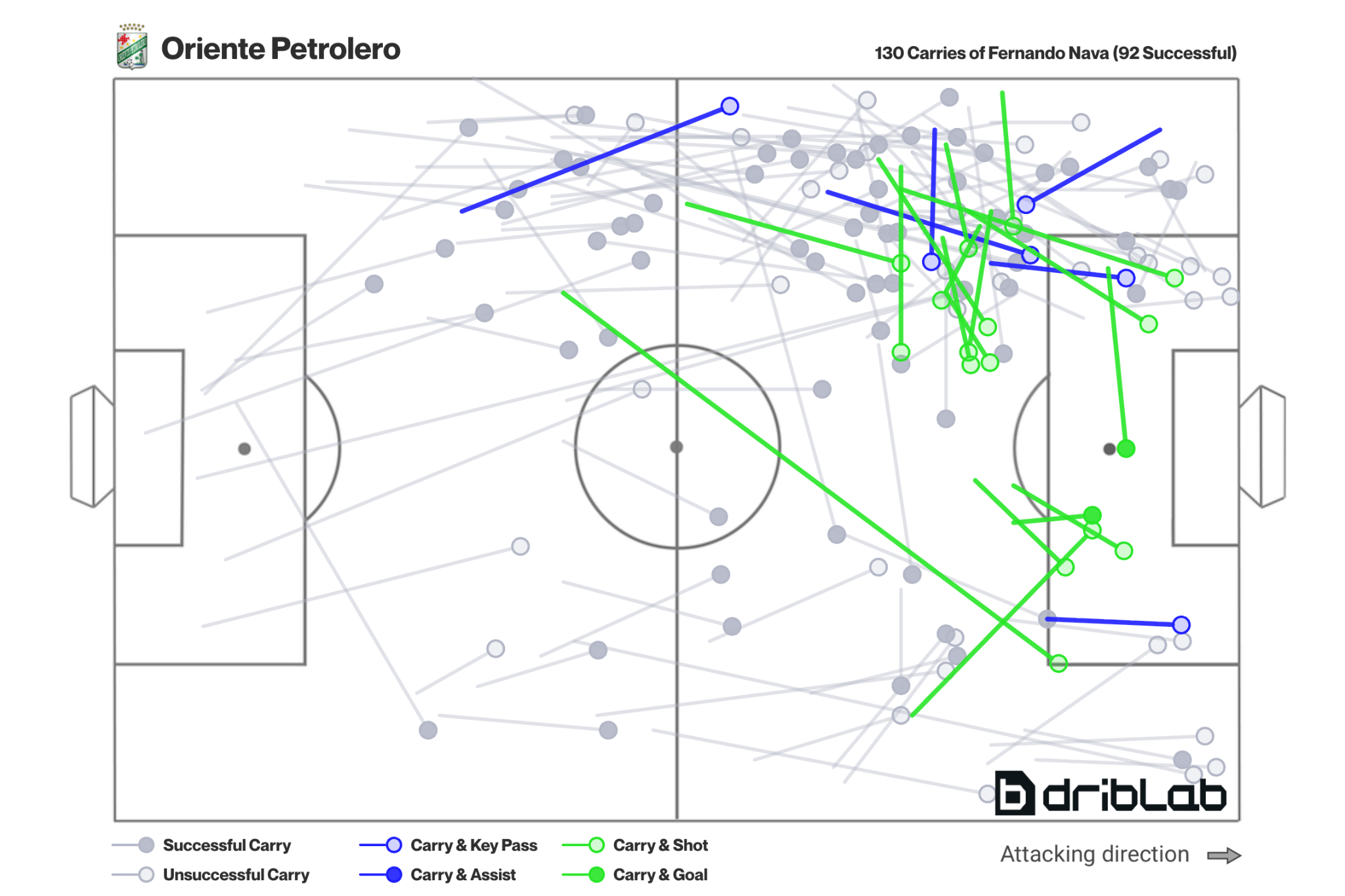
Combining both metrics, Nava totals 20 shots following a dribble, the fifth-highest figure in the Bolivian league last season.
His directness and powerful stride will be a great asset to Bolivia in covering ground and closing in on the opposition goal quickly. Nava completed 3.3 progressive carries (those that bring you 20% closer to the opposition box) and on average advanced 17.9 metres with each carry. That places him in the top 10 of the Bolivian league.
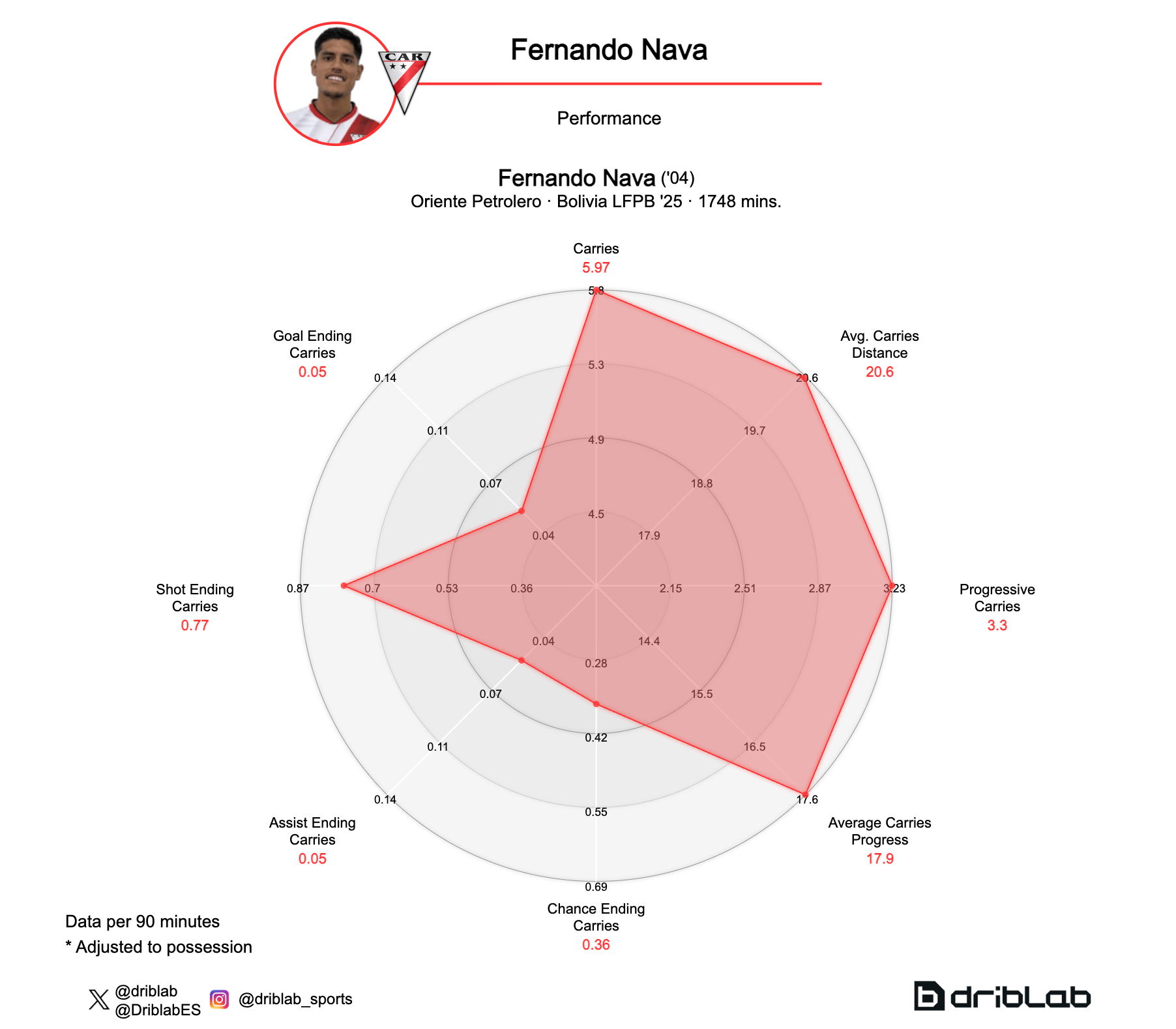
An individual talent like Nava's can be a huge asset to Bolivia, a team that does not have players technically equipped enough to dominate matches from start to finish. With Nava, La Verde gains directness, the ability to beat men, and a goal threat. Three things that are never unwelcome in knockout football.

Pavel Sulc - Olympique Lyon - Czech Republic - 2000
It is difficult to pin Sulc down to a single position because on the pitch he is a free spirit. Paulo Fonseca has used the Czech in a two-striker setup at Lyon, but the profiles he has selected to partner him have varied.
With the arrival of Endrick in January, Fonseca seems to have found the perfect complement for Sulc. Both are players who move well in the support role and in behind. The Czech's responsibilities revolve around the former and Endrick's around the latter.
That is why it is difficult to pigeonhole Sulc as a striker. Mainly because he departs from the classic striker's role in everything related to the physical friction involved in winning fouls and contesting both ground and aerial duels. The frequency with which he operates inside the box is low. He shoots infrequently, and the share of his team's xG he accounts for is limited compared to other Ligue 1 strikers.
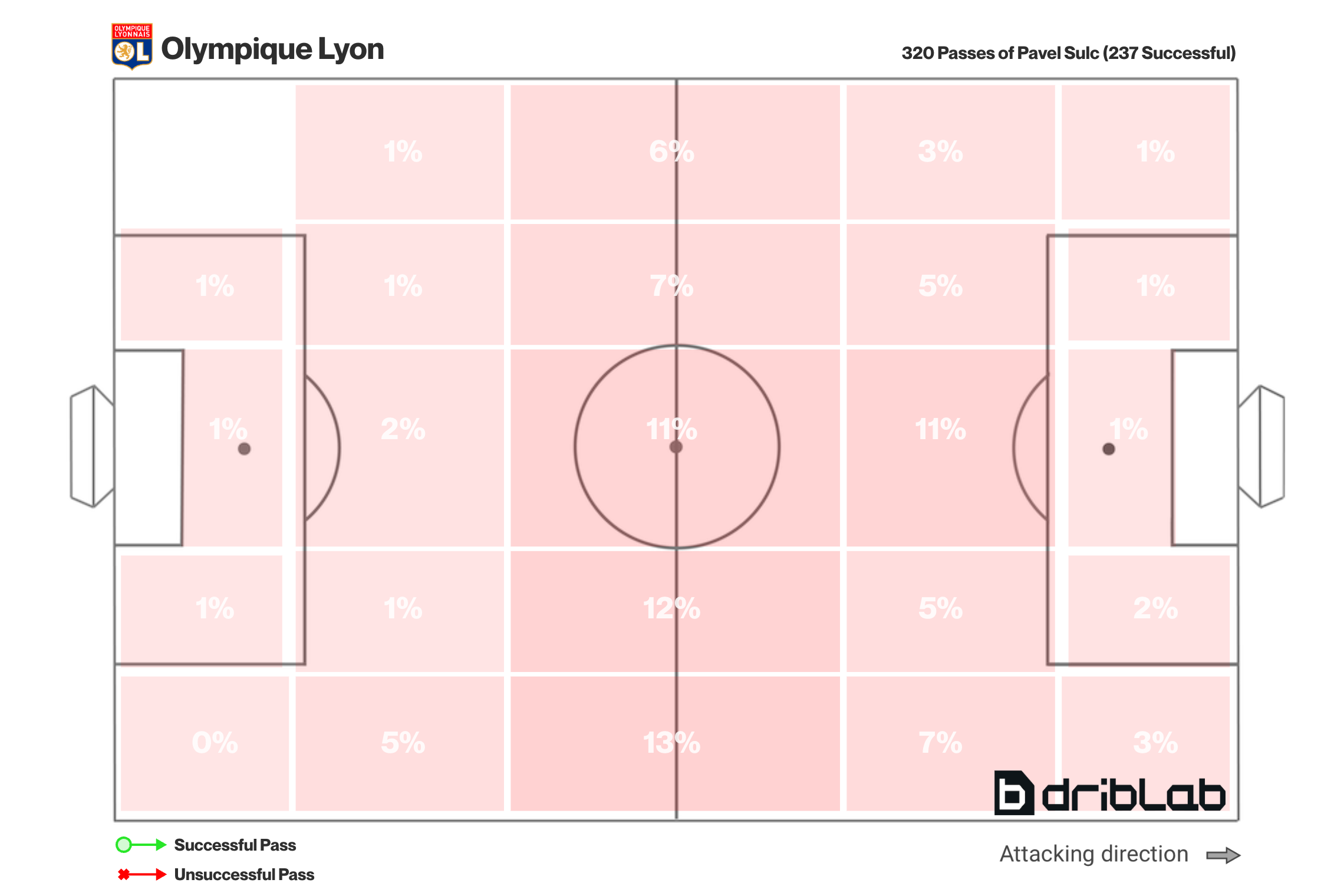
He is primarily a mobile forward who, without being especially creative, connects his team's attack and is involved in almost every dangerous move. He also creates chances with his passing (0.09 xA per game, above average). 27.2% of his passes are forward. Only 20% of strikers in the French league average a higher percentage (10 out of 52).
But he is also a forward who drifts outside the box in order to arrive into it unmarked and find quality shooting opportunities. His average of 0.18 xG per game places him 11th out of 52 strikers.
Once he reaches those positions, his ability to finish is exceptional. Across his last three league seasons he has scored 38 goals from a total of 25 xG, excluding penalties in all cases.
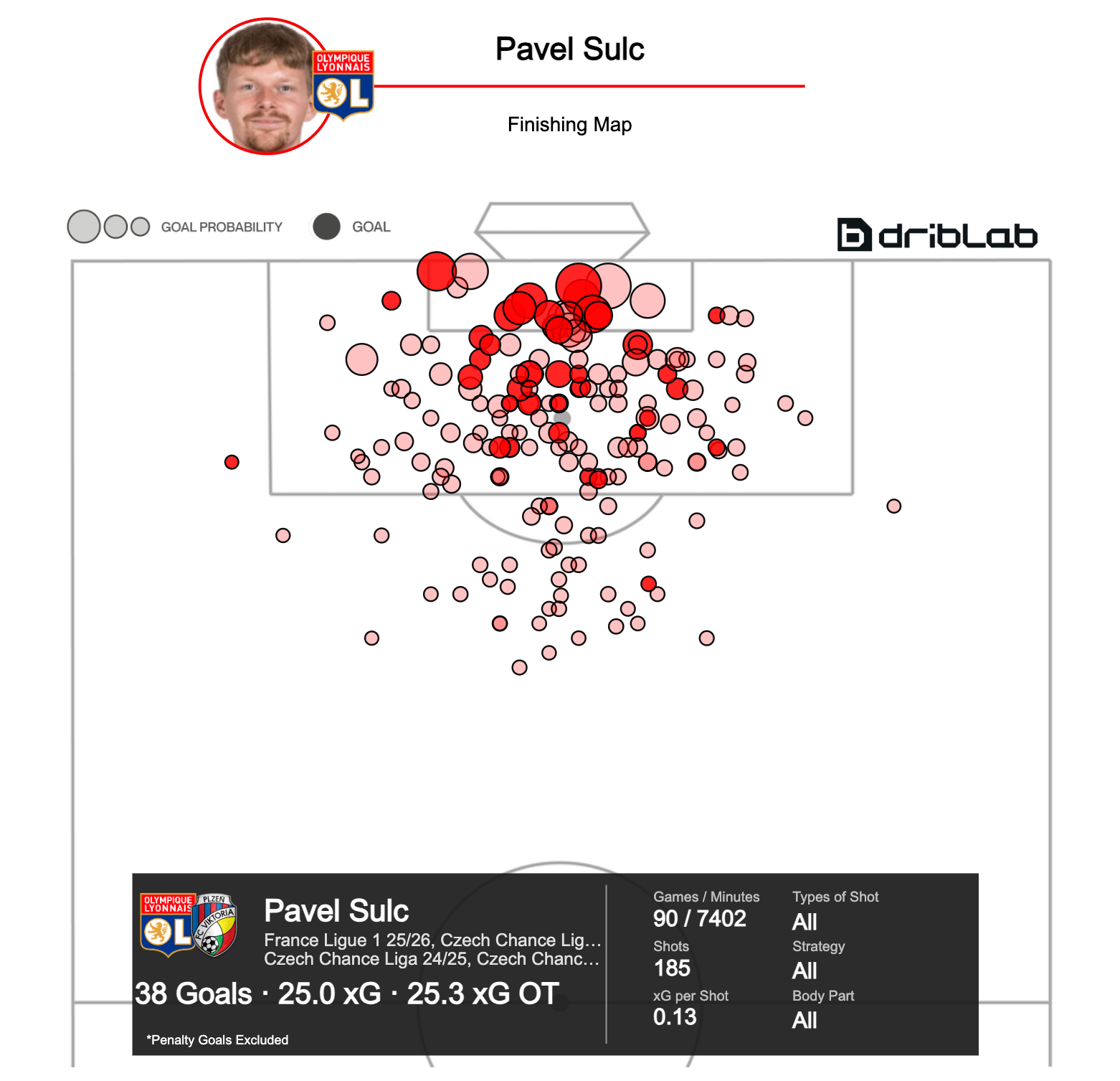
He is an unorthodox footballer whose performance and importance to his team are not reflected in conventional data. But with our physical and Arrigo data we can understand that, despite being a player who is not heavily involved, Sulc is key for Lyon thanks to his ability to move without the ball and offer solutions to his teammates.
His 10.4 kilometres covered per game place him above 73% of strikers. His 45 High Intensity movements rank him as the 6th most active striker in that regard.
This dynamism combined with frequent high intensity ties in well with the fact that Sulc makes more close support runs, runs in behind the ball, and inside runs than 85% of Ligue 1 strikers. These inside runs see him arriving from deep and overtaking the ball carrier through the central channel.
His off-ball dynamism, intelligent interventions, and ability to read dangerous situations to get shots away could give the Czech Republic a real edge in the World Cup play-offs.
Shea Charles - Southampton - Northern Ireland - 2003
Charles' 10-year spell at Manchester City's academy becomes evident with just one minute of watching him play. Well-refined technique, on-point body orientation to receive and quality in his deliveries.
In Northern Ireland, Charles is paired with Galbraith, the Swansea City midfielder. They are joined from the right wingback position by Connor Bradley (Liverpool) and from the left by Justin Deveny (Crystal Palace). Together they form a second line behind the striker that brings considerable quality as well as the ability to attack with the ball under control.
His first Championship season, with Sheffield Wednesday on loan from Southampton, was a very successful one. An injury forced him to stop what started as a consolidating season. His return in January was great news for both the Saints and the Northern Ireland squad. He is an important piece in both setups.
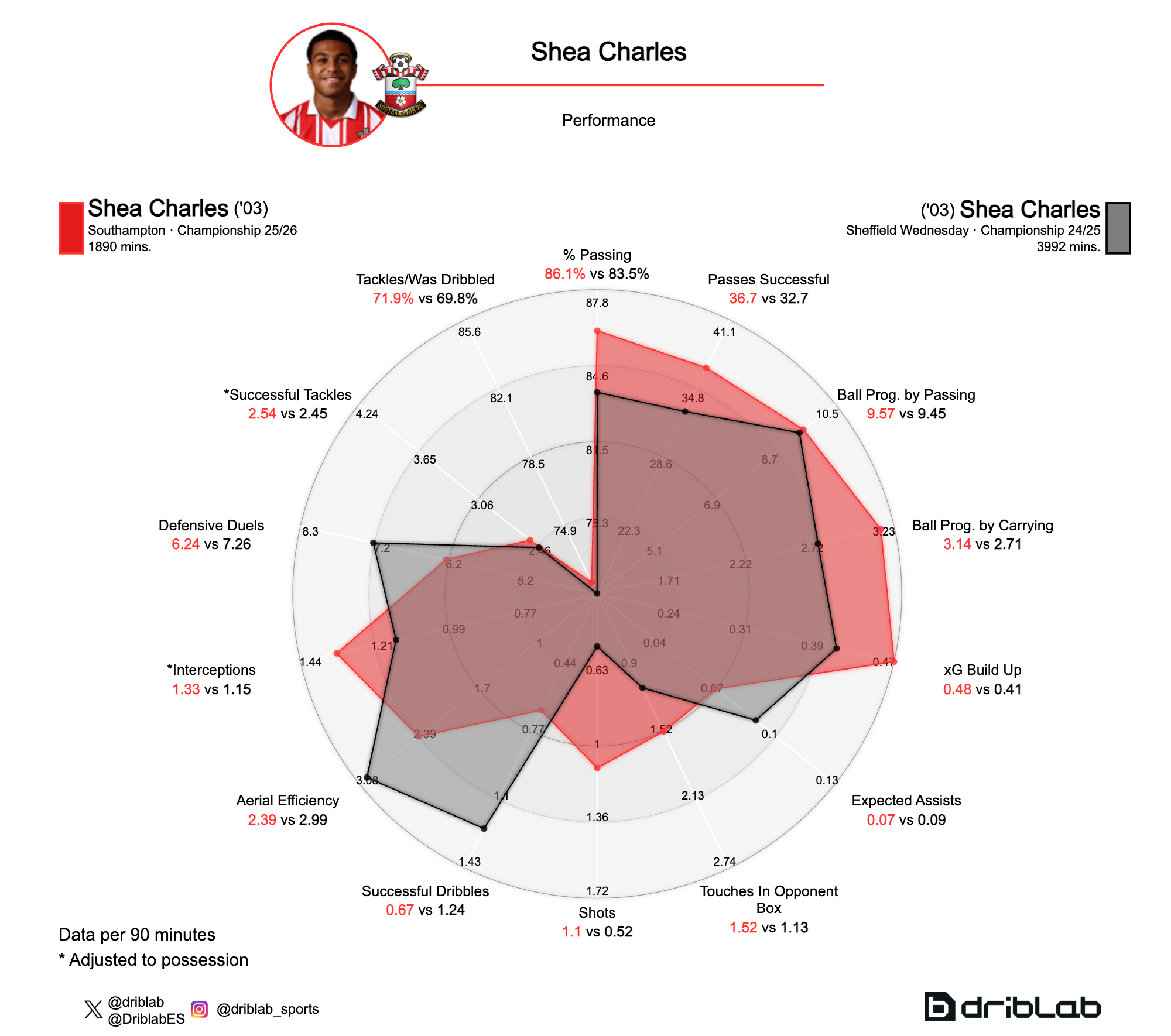
Charles's radar shows how he does a bit of everything, bar getting into the box and taking shots. As individual quality around him increased, so did his passing and carrying figures. They now rank among the best in the division. On the other hand, he now has less defensive work to do, and his numbers have consequently decreased.
He's a well-rounded player who can affect different phases of play. But for me, the build-up phase is where he could be really, really useful as he goes up the ladder. He's comfortable receiving from the centre-backs, organising play, and even breaking lines. He's a pass-first midfielder, not really a ball-carrier. All of this can be seen through our Arrigo metrics, which combine event and tracking data.
His passing is incisive, direct and often line-breaking. His average of 3.6 line-breaking passes through the opponents' midfield line ranks above 88% of Championship midfielders. He's good at spreading passes through the lines but also has the ability to find the free man. His 4.03 completed passes received into space represent the 5th best figure in the second tier of English football.
.png)
It is not just the number of players he beats but also the frequency with which he attempts passes that do so. Looking at our Line-Breaking Passes metrics pack, Charles plays a line-breaking pass every 7.62 passes. Only two midfielders out of 127 with more than 450 minutes in the competition better that frequency.
The Northern Irishman is an unfinished footballer who at times makes even elementary mistakes. But his innate technical ability could offer a great deal to his national team.
Victor Froholdt - Porto - Denmark - 2006
At Copenhagen, Froholdt put in some extremely high-level performances, befitting a talent of enormous potential. His rapid adaptation to Portuguese football has been equally surprising.
It is true that given his talent, and the considerable financial investment Porto made, it was a feasible outcome. When you are the second most expensive sale in the entire history of the Danish Superliga (€20 million), the level of expectation is always going to be significant.
The reality is that Froholdt has played 94% of the available minutes in the Primeira Liga, missing only 200. He has already accumulated 4 goals and 5 assists. All this as a midfielder in a team that demands a great deal from the players in those positions.
The Dane is a textbook box-to-box player, with tremendous dynamism and a spectacular physique that allows him to reach every area of the pitch. Among the 106 Primeira Liga midfielders with more than 450 minutes played, he covers the highest percentage of his total distance at High Speed Running, at 8.46%.
While he does not stand out for the number of sprints he makes or for the percentage of his distance covered at sprint speed, his relentless high intensity allows him to arrive in position on time and to start from an already activated state.
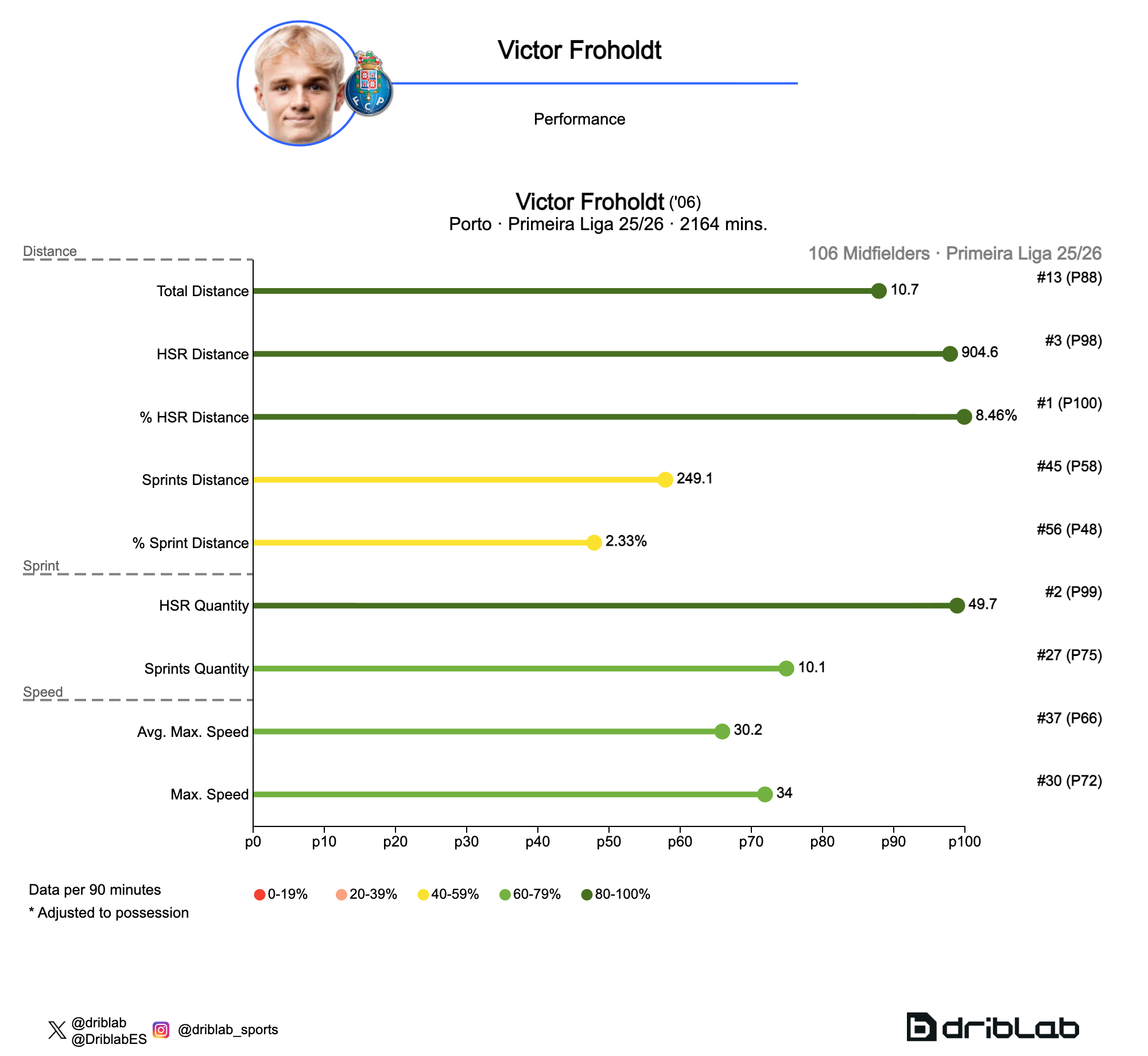
Furthermore, looking at how he applies that intensity, only three players have made more pressures on the ball (223) than him across the entire Portuguese top flight. It is a profile of enormous value in modern football. He is a player who barely rests.
That energy also translates, as you would expect given his age, into a greater inclination to carry the ball. He bulldozes through whatever stands in his way. He ranks above 90% of Primeira Liga midfielders for players beaten by carrying per game (2.41).
He also carries in dangerous areas and beats important opponents such as defenders. He beats 1.33 defenders per game through carrying, meaning 57% of the opponents he beats in open play are defenders. A very significant figure.
In contrast, he ranks 97th out of 106 midfielders for players beaten by passing, with just 4.78. This is something that will improve as he gains experience.
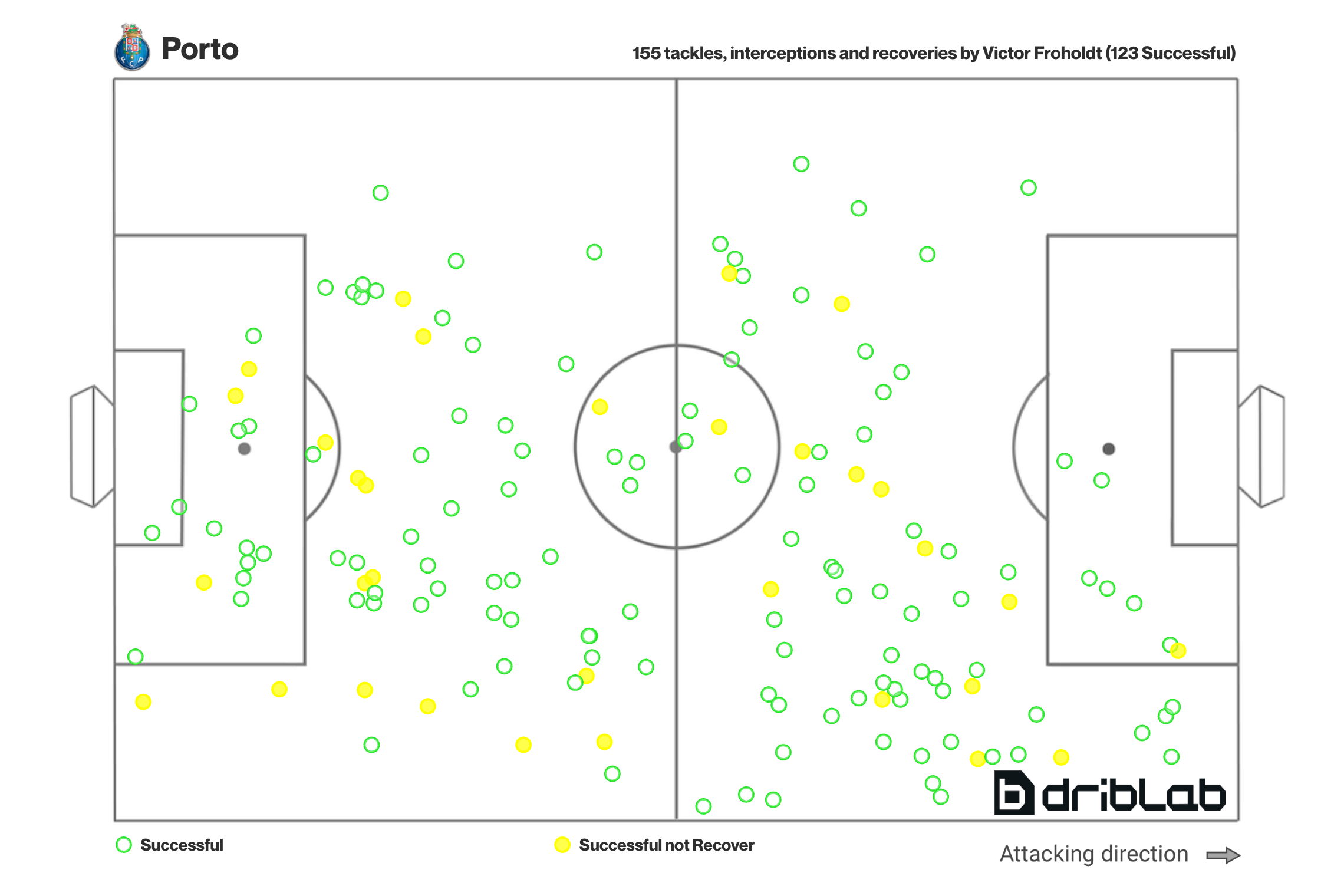
We can confirm that box-to-box profile by first looking at the volume of his defensive actions, which are distributed fairly evenly between his own half and the opposition's.
He ranks above average compared to his peers in actions such as attempted tackles, ball recoveries, and interceptions.
On the offensive side of his box-to-box profile, his 0.16 expected goals per game place him above 86% of midfielders. His 0.07 expected assists per game also put him above 78% of his peers.
Froholdt has started 5 of Denmark's last 6 matches, all of them with something at stake. He will be very important ahead of the match against North Macedonia. Froholdt, Dorgu, Nartey, and Hogsberg will all be crucial in providing a generational handover for a national team that has performed very well in recent years.
Marco Palestra - Cagliari (on loan from Atalanta) - Italy - 2005
Palestra is one of the new additions to the Azzurri squad. He is a wingback or full-back who excels in many aspects of the game, both defensively and offensively.
Compared to the 75 wingbacks or full-backs who have played more than 450 minutes in Serie A this season, he ranks third for completed dribbles with 2.61 per game, seventh for completed ball progressions per game (2.8), and eleventh for total carries per game (5.55).
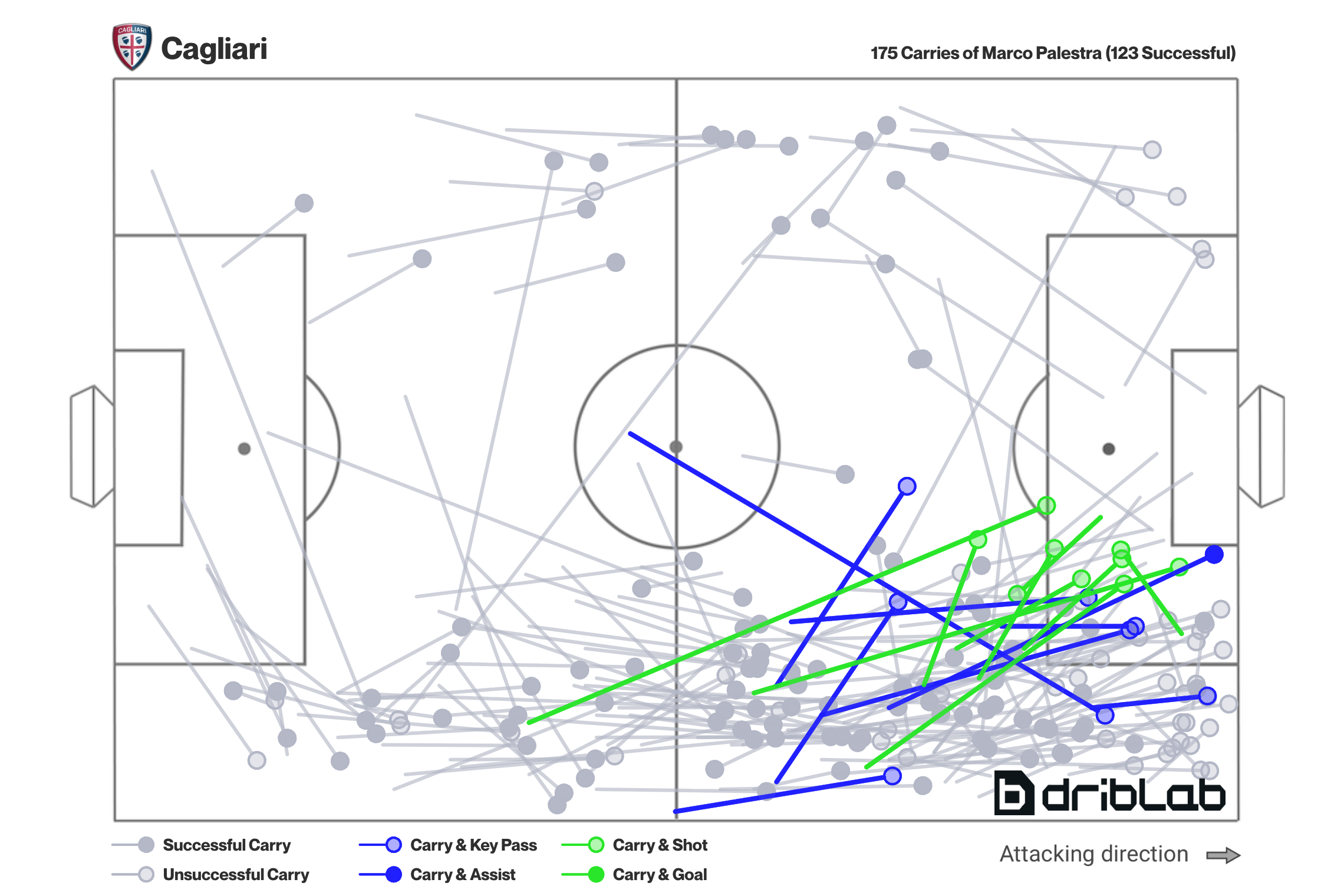
The map shows that Palestra is a very direct wingback with notably long carries who generally manages to threaten advanced areas.
His first call-up to the Italian national team comes after a debut Serie A season with regular minutes and a very significant impact. He has played 95% of available minutes. When he is on the pitch he is the third wingback or full-back who accounts for the highest percentage of his team's touches in the opposition box. Around 18% of Cagliari's touches in the opposition area are his.
He is also responsible for 37.7% of Cagliari's open-play passes into the opposition box, the seventh-best figure in Serie A. He has taken on a great deal of responsibility despite this being his first year.
Not only does our SCORE rank him as the seventh-best wingback out of 46 in Serie A, but our physical performance SCORE places him as the third-best wingback in Serie A this season.
His carrying ability is better understood when we look at his physical performance radar. He is a hyper-explosive footballer. He covers 3.58% of his total distance at sprint speed, above 25.2 km/h, the fourth-highest figure in Serie A. At that speed he covers 358.6 metres per game. Only two players cover more distance at sprint.
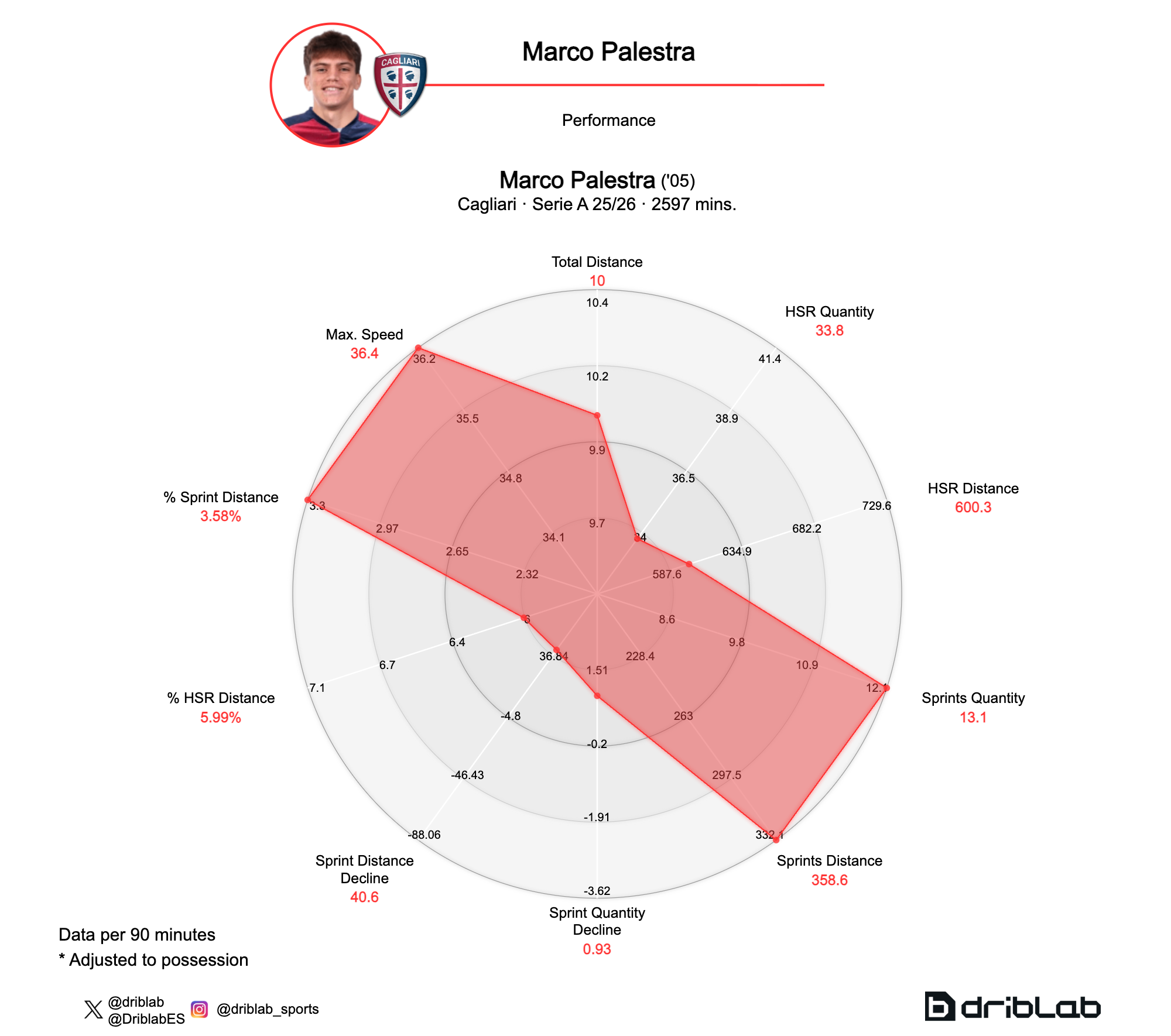
On top of that, his average top speed of 33.2 kilometres per hour is the fourth highest among wingbacks and full-backs in Serie A.
As this is his first call-up, Palestra will not have a major role. However, with an Italy going through a difficult period and hit hard by injuries, a player who needs very little from the team around him to generate a threat would not go amiss.