Football has always been played in three dimensions, but tracking data hasn't. Until now, ball position was calculated using homography, a method that projects the ball's pixel location onto the pitch plane. It works perfectly when the ball is rolling along the grass. The moment it leaves the ground, though, homography breaks down: it assumes the ball is always sitting on the pitch, so once it's in the air, not just its height but its entire position becomes unreliable.
We've closed that gap.
This new capability builds on everything we already know about our Tracking system, and, above all, on the fact that it has been tested against the gold standard in optical tracking.
What is it?
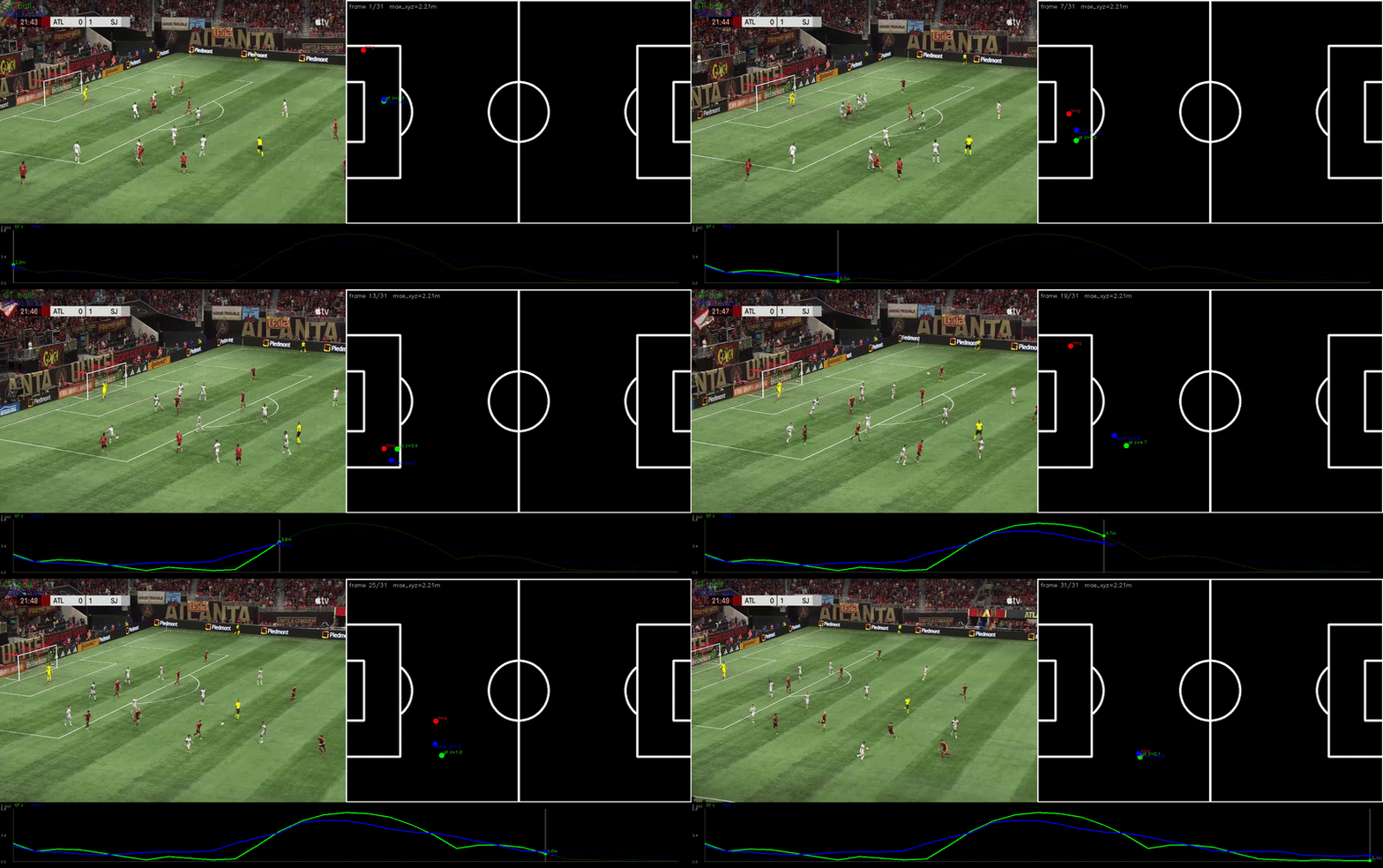
We've developed 3D Ball Trajectory Estimation, a new component of our tracking pipeline. Until now, when the ball left the ground, not only was its height unknown, its x/y position was inaccurate too, because homography assumes everything it tracks is sitting on the pitch. Our new model corrects for this: it estimates the ball's real x, y, and z coordinates together, giving us an accurate 3D position at every frame, whether it's a driven pass, a long ball, a header, or a shot arcing into the top corner.
How does it work?
Our approach is built on a two-stage deep learning pipeline trained on broadcast footage. The first stage learns to estimate the ball's height from the visual and positional signals available in each sequence of frames. The second stage then refines that estimate across the full trajectory, smoothing out noise and correcting for the fact that a ball in flight follows physically consistent patterns from frame to frame.
The result is a continuous, frame-by-frame estimate of the ball's real 3D position, not just when it lands, but throughout its entire flight.
What does this unlock?
This isn't just a new column in a spreadsheet. It changes what's possible with our tracking data:
- True 3D ball trajectories. For the first time, we can reconstruct the full flight path of the ball, on the ground and in the air, rather than assuming it's always at pitch level.
- Sharper models across the board. Any model that consumes ball position as an input gets more accurate, starting with our Expected Goals (xG) model, where knowing the actual height of a shot or a bouncing ball meaningfully improves shot-quality estimates.
- Better pass classification. Driven passes, lofted balls, crosses, and switches of play all look different in the air. Height data lets us classify pass types with far more precision, and identify long switches of play more reliably.
- Improved player tracking off-camera. Ball height feeds into the models that infer player positions when they're outside the camera frame. A more accurate ball trajectory means a more accurate picture of the whole pitch, even where we can't directly see it.
- New tactical and set-piece insights. Aerial duels, corner deliveries, goalkeeper distribution, long balls over the top: all of these become measurable in ways that weren't possible with 2D tracking alone.
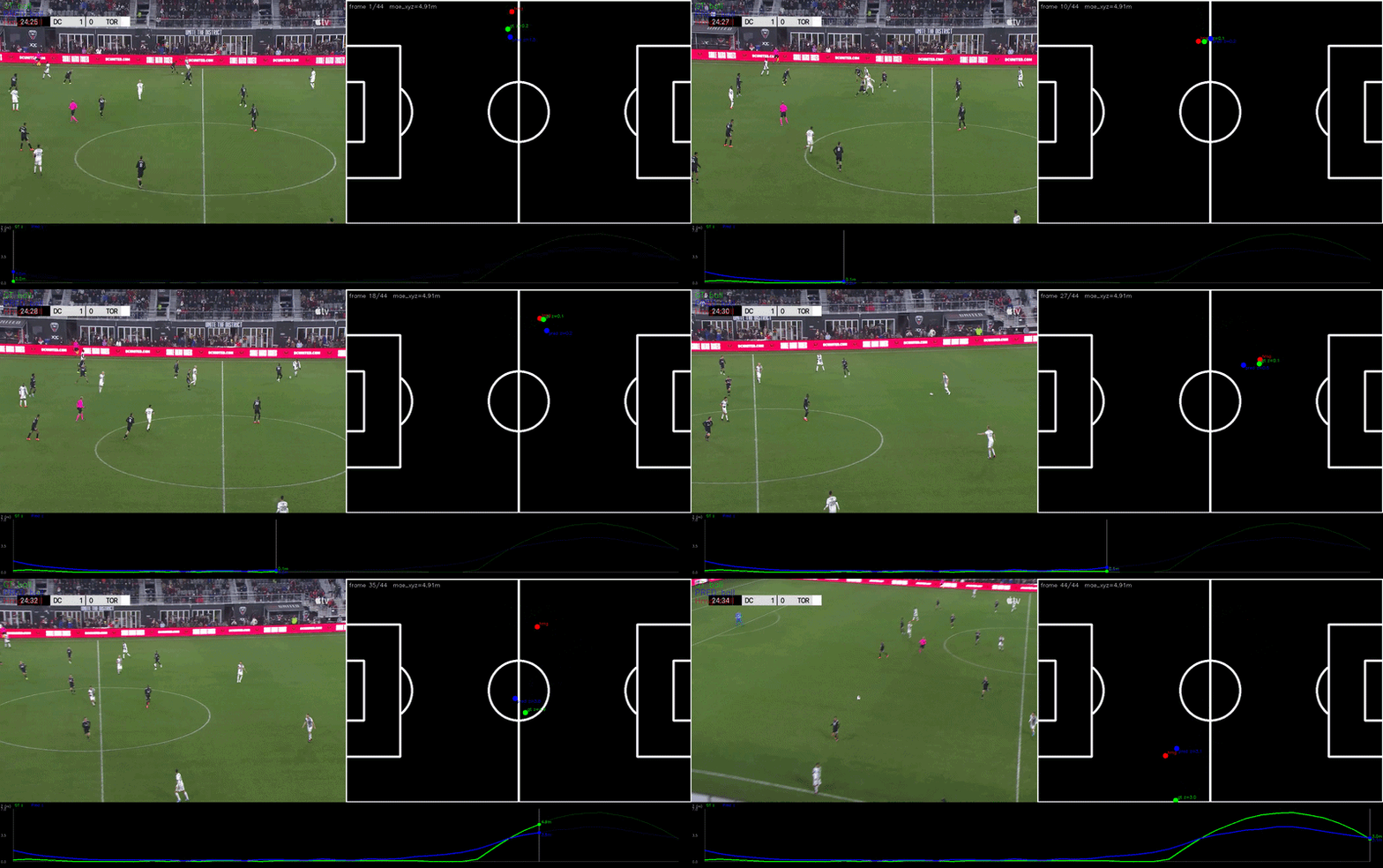
In short, this opens up a new dimension of analysis, literally. We're just getting started exploring what it makes possible, and we'll be sharing more of that in the coming months.



