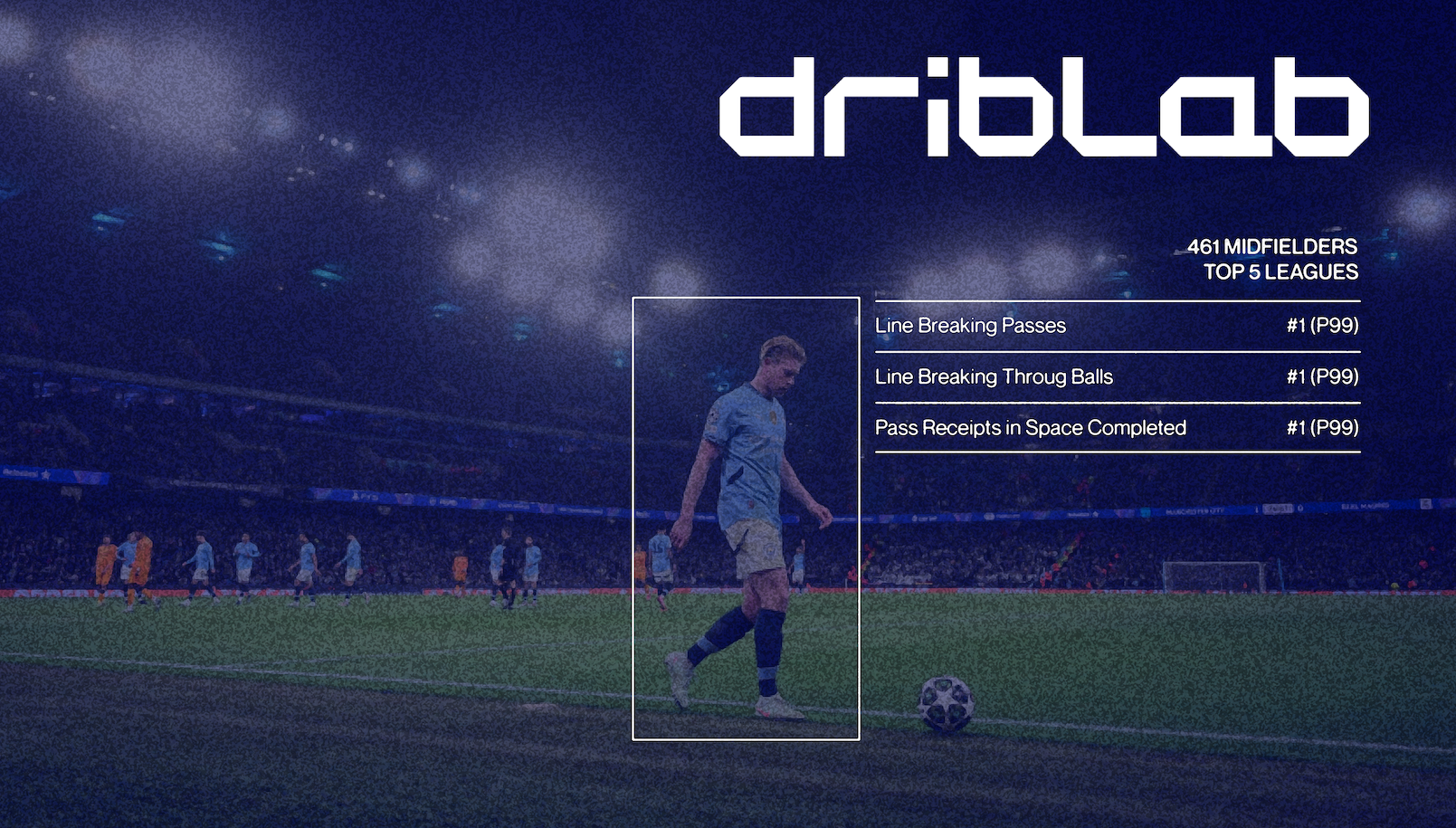
In modern football, the use of data has become a fundamental pillar for sporting, tactical, and strategic decision-making. Within this technological ecosystem, tracking is one of the most relevant advances, as it allows the game to be analyzed from a fully spatial and dynamic perspective. Specialized companies have developed systems capable of recording the movement of every participant in a match, opening new possibilities for clubs, analysts, and coaching staff.
Tracking in football consists of the continuous collection of positional data from the 22 players and the ball during a match. These systems are usually based on computer vision or multi-camera networks, capable of detecting and following every movement at very small time intervals. For example, modern solutions can record player and ball positions several times per second, generating extremely detailed datasets that allow the study of tactical, physical, and strategic aspects of the game.
This type of data makes it possible to measure distances covered, speeds, tactical positioning, space occupation, and collective patterns, which is crucial in elite football. In addition, optical multi-camera tracking systems are considered the industry reference standard because they capture real on-field movements with high spatial and temporal accuracy.
To better understand its importance, it is necessary to differentiate tracking from eventing (event data). Eventing is based on recording specific game actions — passes, shots, recoveries, fouls, etc. — usually through manual or semi-automatic annotation. This approach provides context about what happens during the match, but it does not always explain why it happens from a spatial perspective. In fact, traditional event data often depends on manual logging, which limits its availability and level of detail compared to tracking.
Tracking, on the other hand, provides a continuous stream of contextual information. Thanks to it, it is possible to reconstruct complete plays, analyze off-ball positioning, or even generate events automatically based on player and ball movement. Today, both data types are usually combined to generate more advanced metrics and more complete analytical models.
Within this sector, tracking developed by Driblab is considered among the most accurate for several technological and methodological reasons. First, its solutions are designed to capture movement through computer vision models and machine learning algorithms that identify players, teams, and trajectories with a high level of reliability.
Additionally, comparative analyses show that its physical metrics have a great correlation with optical multi-camera tracking, which is considered the industry gold standard. This alignment indicates that their data replicates real player physical load with high fidelity, even when obtained from broadcast video signals.
Another key factor is consistency in complex metrics such as total distance, high-intensity actions, and maximum speed, where Driblab data shows closer alignment to the reference standard than many competitors.
In conclusion, tracking represents the future of football analytics because it allows the game to be understood as a whole, not only through isolated actions but through the continuous movement of all match elements. Technological evolution and constant improvements in accuracy are driving the growth of specialized companies, and solutions like Driblab’s stand out for their ability to deliver reliable, consistent, and decision-making-ready data for professional football.



