The World Cup is here!
As with any tournament of this kind, we are punctual as ever for our scouting appointment. With Driblab's ability to reach anywhere in the world where a football is rolling, we couldn't miss the "players to watch" auction.
We have selected eight, of different ages, but all young and playing in their first World Cup. Some of them we have already covered in depth; others we are introducing to you for the first time.
Two quick notes and we get going: unless stated otherwise, the minimum number of minutes a player must have played to be considered in charts, radars or comparisons is 450 minutes.
To make things easier, from here on, if you see a scatter plot in which the bubbles are orange, those are midfielders. If they are green, defenders. If they are pink, wide players.
Let's go!

But before we get to the players, we've launched our own open-data website, featuring rankings, predictions, and in-depth analysis. Check it out at the90lab.com.
Gustavo Puerta - Colombia - 2003
Like almost everyone on this list, Puerta will play in his first senior international tournament. Despite being only 22, the Colombian has racked up more than five thousand minutes over the last two seasons. Both in second divisions, at Hull City and Racing de Santander respectively.
He makes his debut in a World Cup after a fantastic season at Racing de Santander, newly promoted to LaLiga, a side that plays an extremely interesting brand of football, closely linked to the relationist school.
In that context of movements and positional rotations, Puerta has shone as a possession organiser, short-range connector in Racing's attacks. He is a first and second line player who barely engages with creation or final production. He is not creative, but he is extremely functional through his passing.
Luckily for Puerta, at a frenetic Racing with an enormous variety of movements, there are always free options to pass to. It is not a context where he has to cover huge stretches of pitch without the ball or carry it over long distances.
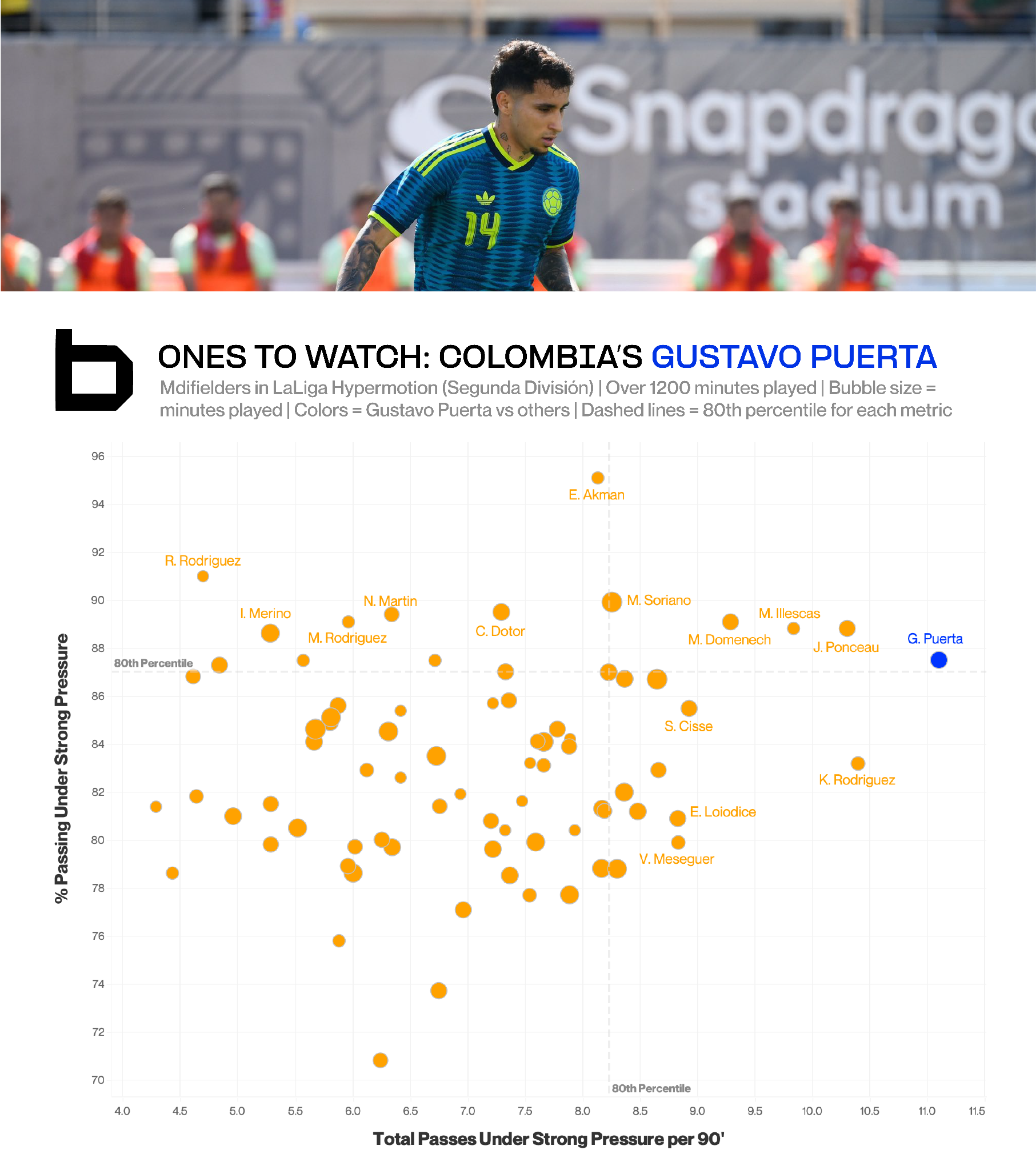
The main weapon of the La Victoria-born midfielder is his sharp, progressive and frequently line-progressive passing. On top of that, when passing under pressure he barely struggles. Puerta attempted the most passes under pressure per game in LaLiga Hypermotion.
He uses body feints well to create space before receiving the ball but he shows no magic tricks and does not dribble much. Once Puerta creates the minimum amount of space for himself, he's quick to release the ball. The Colombian carries the ball only when strictly necessary as he does not have enough running power over long distances. However, the first step gives him just enough advantage to bypass the opponent and play the next pass.
Defensively, typically South American, he goes hard into duels, commits fouls and is quite active, making numerous tackles per match.
Musab Al-Juwayr - Saudi Arabia - 2003
At 22, Al-Juwayr arrives at the World Cup after an ideal progression. This season he has racked up 6 goals, 7 assists and played 78% of Al-Qadsiah's total minutes.
Together with Al-Dawsari, he's one of Saudi Arabia main men. All in all, a national team that has improved a great deal since that famous win over Argentina in Qatar.
Proof of that is the rising level of its players. Some of them, like Al-Juwayr, did not take part in the previous tournament. The Riyadh-born player aspires to be the creative piece who energises the team's play and brings boldness. All of this through a huge number of interventions.
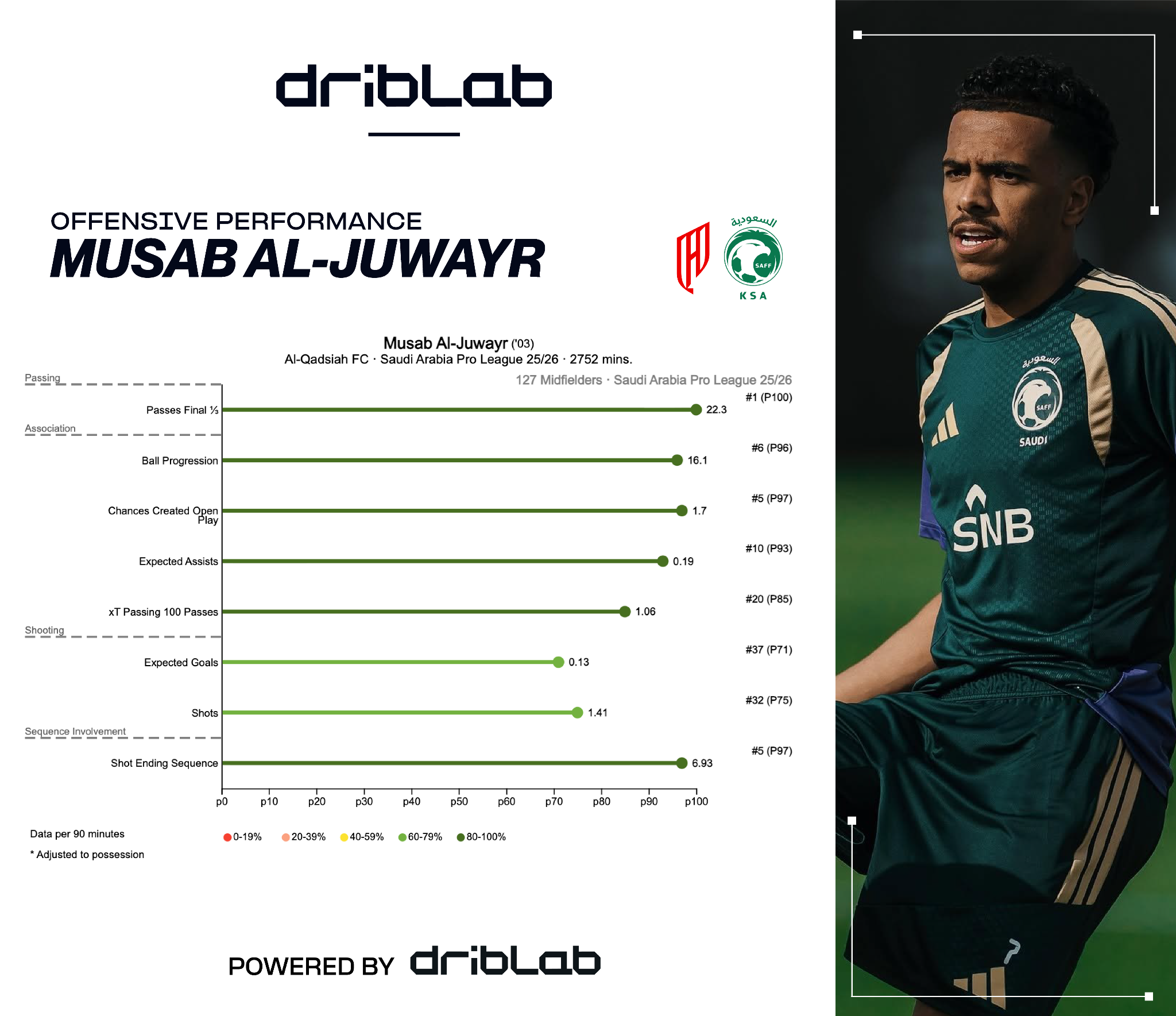
Among midfielders in the Saudi Pro League, Al-Juwayr averages the second highest number of passes per match and the highest number of completed passes received in the final third. He does everything through his passing and takes on a very high volume within the context of his team.
When he is on the pitch, he completes 36% of his team's passes into the box and 14.1% of his team's ball progressions in the opposition half.
His final pass is what has caught my attention the most, beyond the fact that he successfully gets involved in many different areas. He has so much flair that he dares to attempt every type of final pass to break through the last line: into the path of a teammate's run, off the wall, chipped, half-height.,
Whatever it takes to leave the teammate one-on-one with the goalkeeper, he has it in his repertoire.
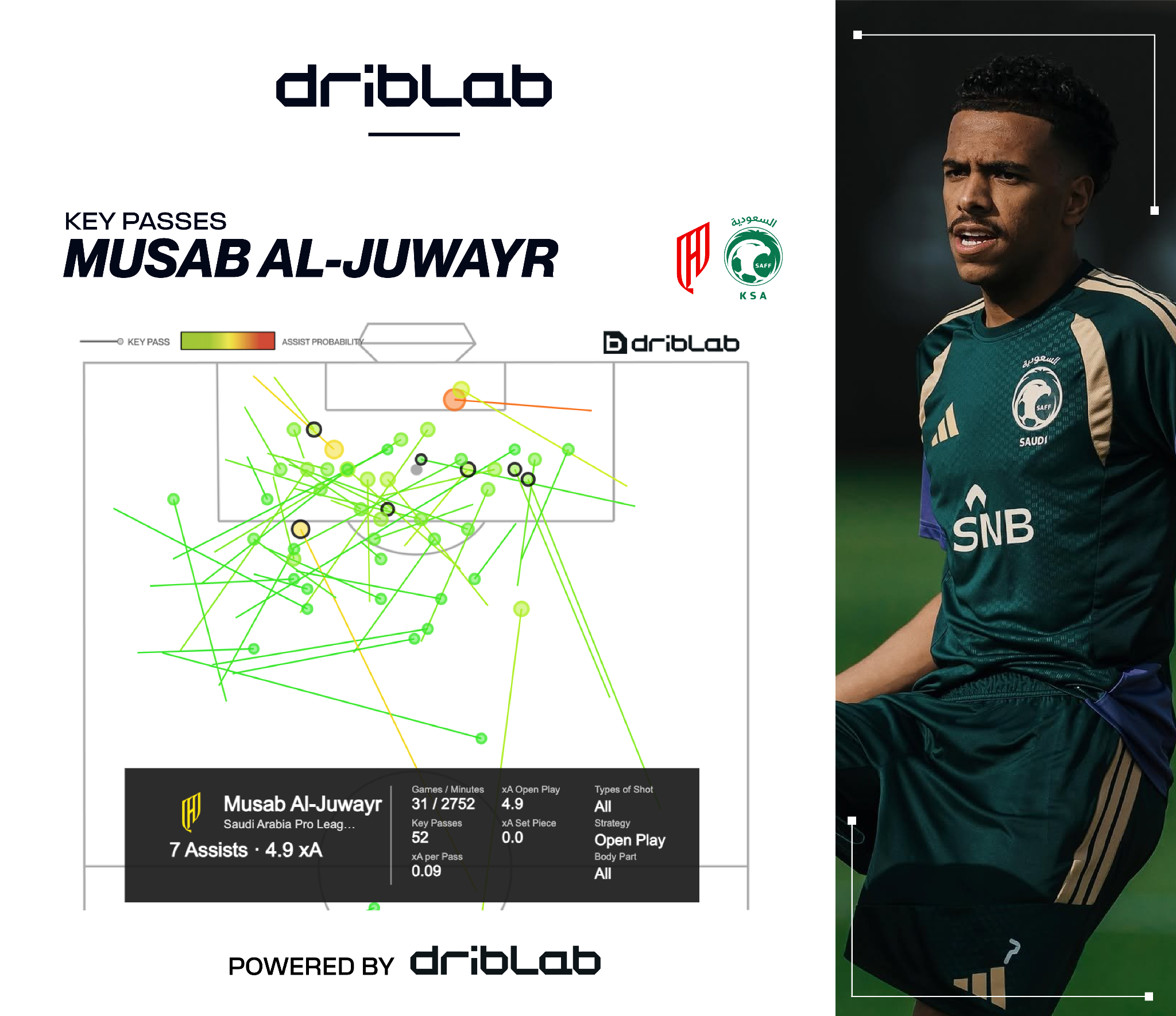
Almost always from the left side of the pitch. His preferred zone. And it is also from there that he projects his off-the-ball movements, which go in both directions.
He averages more runs in front of the ball per match than 89% of the league's midfielders and more supporting movement than 97% of his peers. On top of that, he is the 10th midfielder with the most shooting runs.
He combines passing with off-the-ball movement. All of it with a heavy dose of imagination.
Gilberto Mora - Mexico - 2008
Before getting into the Mexican's game, you should know that we have already covered Mora in depth and that you can find the analysis in Driblab Laboratory: Gilberto Mora. Here are the essentials.
Record after record of precocity in Liga MX, Gold Cup champion with Mexico as the youngest winner in the tournament's history, all before turning 17. At Tijuana he plays as a right-footed, wide-midfielder in the left of a 4-4-2, although he often plays as one of the two strikers. That said, always doing more midfielder things than forward things.
In Gilberto Mora emerges as a phenomenon in Liga MX we describe him as an exceptional attack carrier. His football has gravity: he draws opponents in, opens space for his teammates and directs possessions from his favourite zone, halfway between the central and left channels, where he receives the ball facing the play.
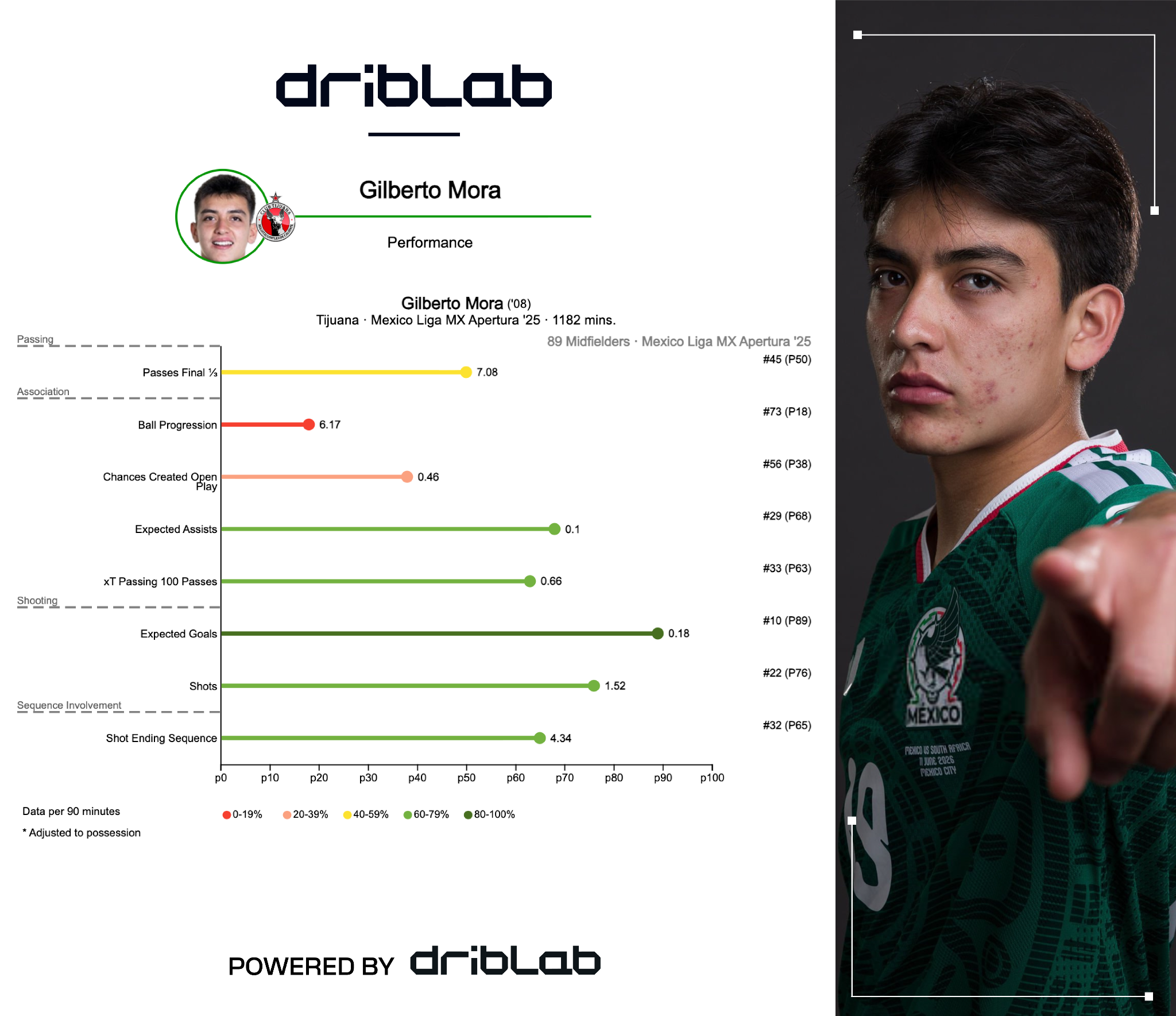
His passing game is unflashy and more solid than his age would suggest. In high-threat zones, he often takes risks, but overall his decision making is risk averse. Under pressure, he rarely suffers.
Where he does add unpredictability and danger is in his ball carrying, his best quality: progressive runs, almost always in the opposition half, that frequently leave opponents behind. It is surprising in such a small player, but it is explained by a very powerful first burst, the use of his arms to protect the ball and a constant reading of everything happening around him.
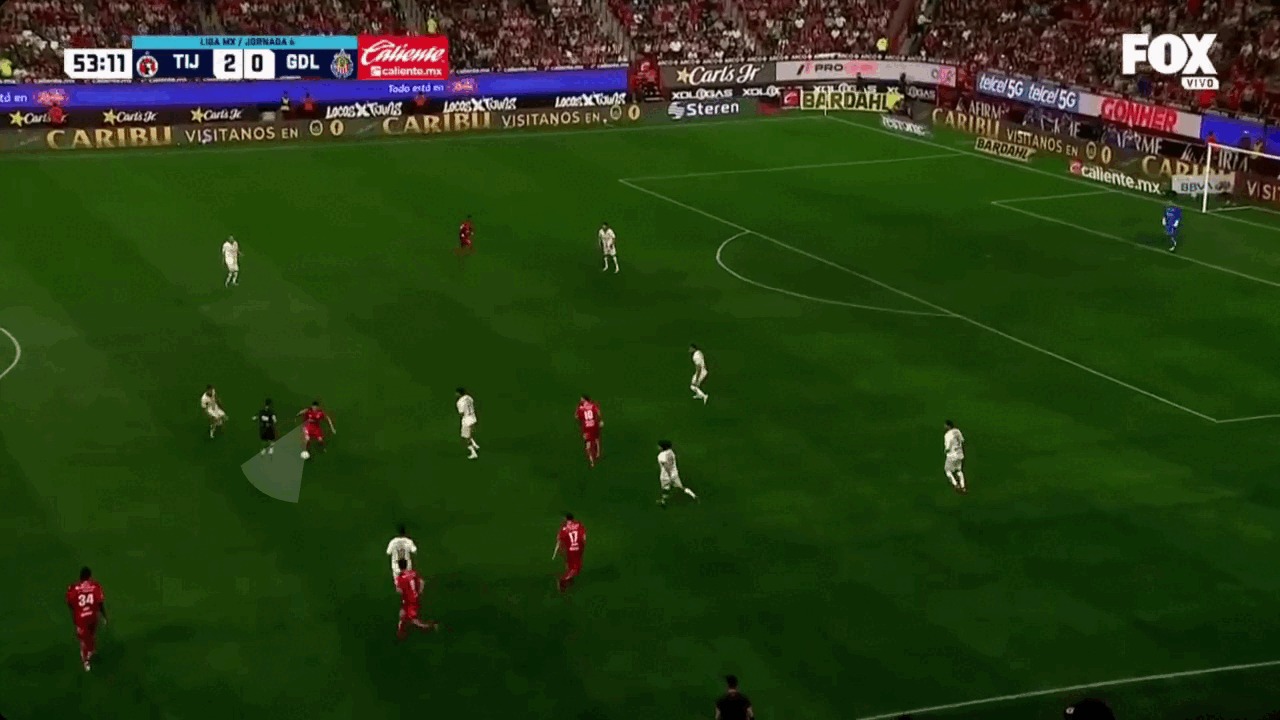
He reads spaces excellently, moves to receive between the lines and never disconnects from the play after passing. Despite being more of a midfielder than a striker or attacker, there is one intrinsic element in Mora's game that does not correlate with his age: his decisive, star-quality timing to add goals and assists.
Tarik Muharemovic - Bosnia and Herzegovina - 2003
For a country that is going to play in only its second World Cup and has never been to a European Championship, the Bosnia and Herzegovina squad has some very cool players.
Muharemovic may not be the most entertaining of the bunch, not only because of his position but also because of his style both with and without the ball, but he is undoubtedly a key figure at the heart of the defence.
This left-footed centre-back, standing over 1.90 metres tall, was born in Ljubljana (Slovenia), came through the youth ranks in Austria (with Kärnten, Klagenfurt and Wolfsberger, where he made his professional debut) and now plays for Bosnia due to his family ties to the country.
Muharemovic is a fairly passive centre-back, with good game reading to make interceptions and anticipate forwards' movements and cut out passes. The defensive actions he carries out, which are not many at all — in fact very few — have an average height of 27.7 metres from his own goal. In the 25/26 Serie A only 12 of 97 centre-backs had a lower average height of defensive actions than the Bosnian.
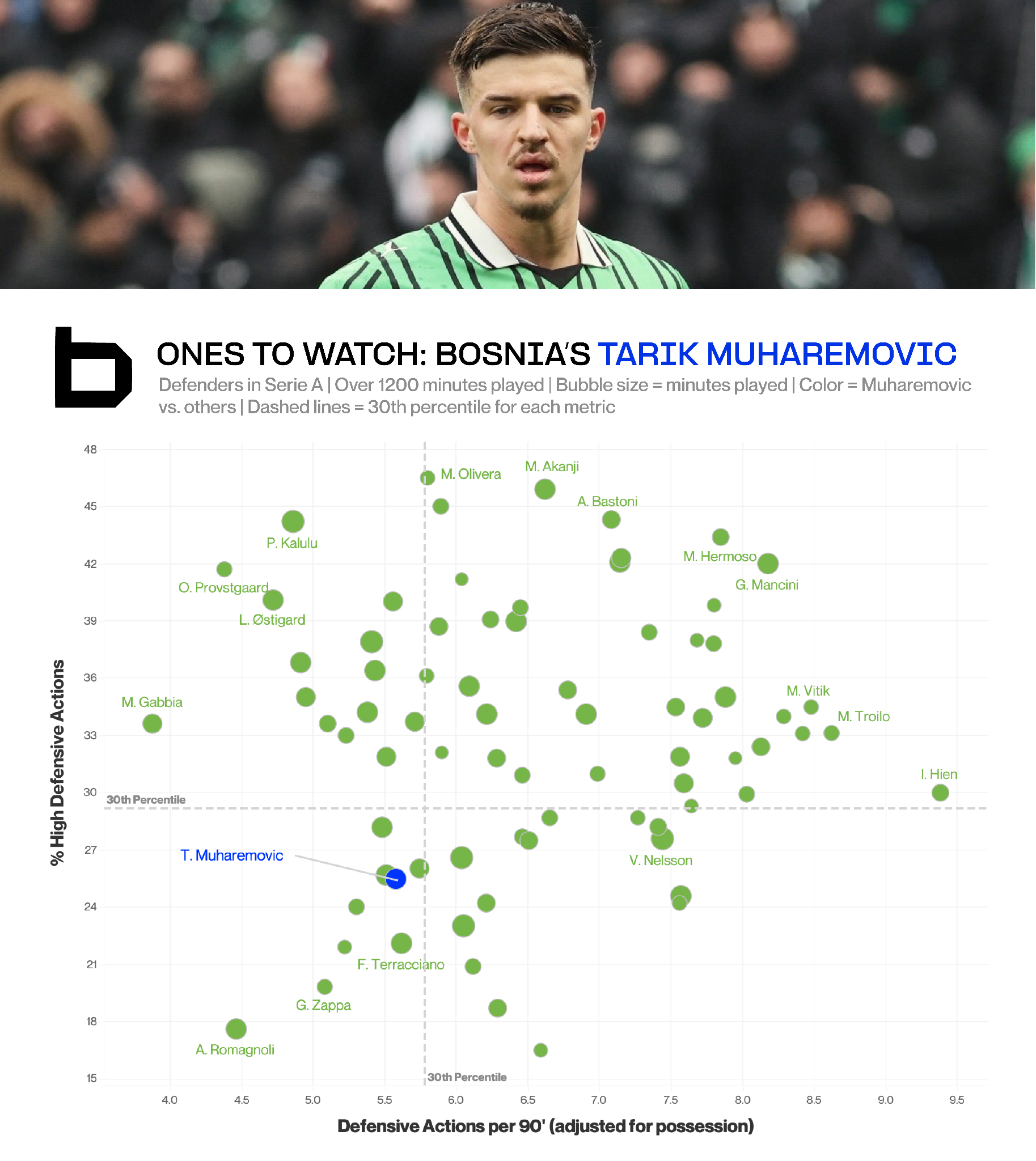
He hardly steps out to press opponents in ways that could leave him exposed without his teammates' cover. Although he is capable of matching most forwards' speed over the first few steps, Muharemovic is not fast nor able to sustain his initial pace over longer distances.
He is a centre-back who feels comfortable defending his own box, something less and less common among younger centre-backs. He enjoys clearing crosses, intercepting passes and blocking shots.
To round off this profile of a passive centre-back, he has good aerial ability. He does not get involved in many aerial duels either, but he often wins them in decisive zones. His 69.2% of aerial duels won in his own box is higher than the average of 85 of the 97 Serie A centre-backs.
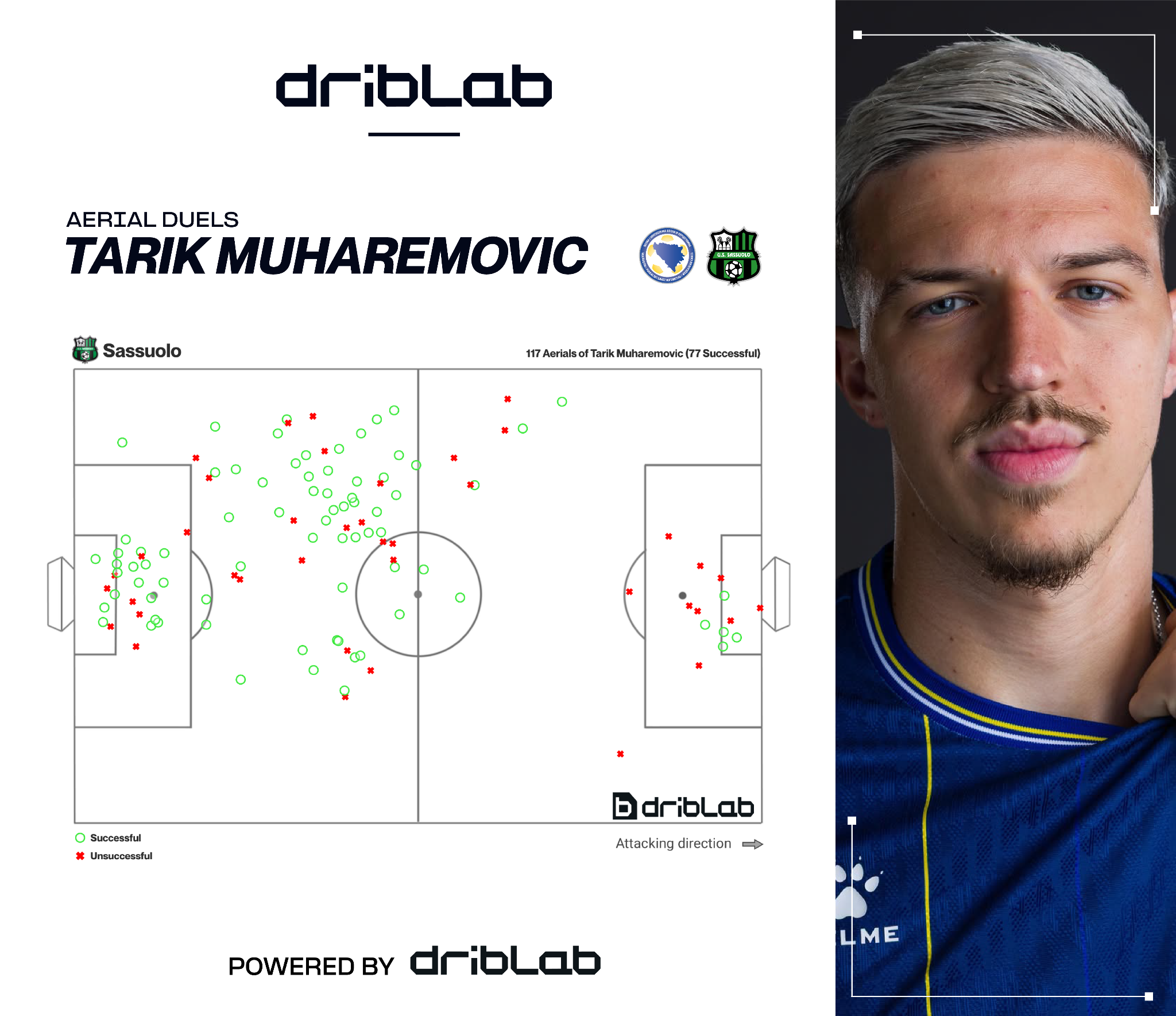
Muharemovic's main value with the ball at his feet is his left foot. Not because it is excellent, but because there are fewer left-footed defenders than right-footed ones. He is a mediocre passer. Neither good nor poor. That said, at Sassuolo he was involved, on average, in the build-up of 10.9% of his team's xG per match. A figure higher than 83% of Serie A centre-backs.
Chris Inao Oulaï - Ivory Coast - 2006
Those who paid attention to Ivory Coast's matches at this season's Africa Cup of Nations, they will know who Cote D'Ivoire facilitator is. If not, from today they will: it's Inao Oulaï, an Ivorian central midfielder at Trabzonspor in Turkey.
He has just turned 20, but he is already shaping up as one of Ivory Coast's most important players, on a par with Bazoumana Touré or Yan Diomandé. Born in Yopougon, he barely reaches 1.73 metres in height. Something that, incidentally, did not stop him from being one of the revelations of the African tournament.
We talk about being a facilitator because that is basically what this midfielder, sometimes defensive midfielder, dedicates himself to. He generates the perfect platform so that his teammates can shine. Through both ball retention and progression, mixing passes and carries.
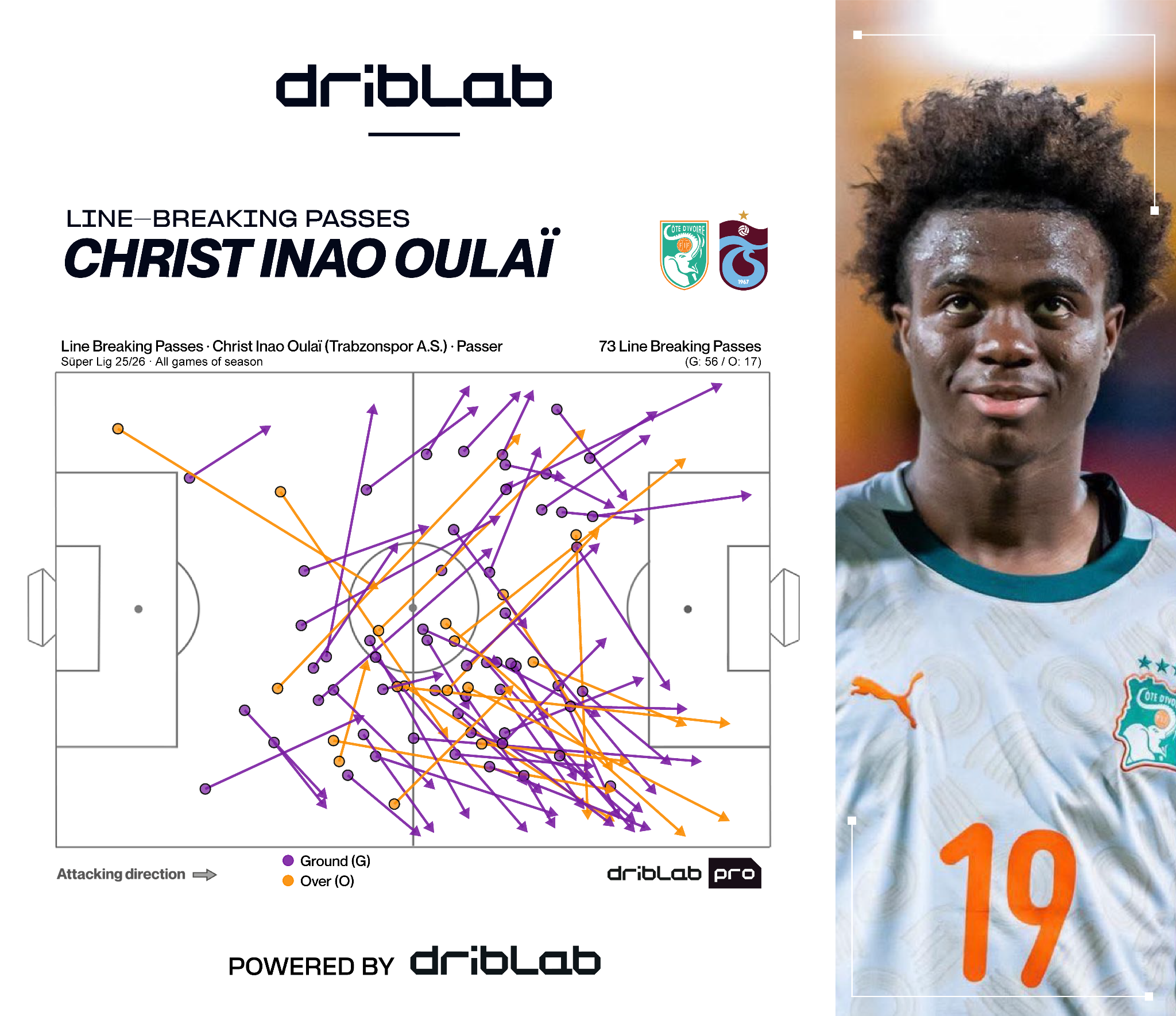
In terms of security, Inao retains the ball wonderfully and completes most of his passes. Under pressure he posts these numbers: he completes 93 out of every 100 passes under pressure and 87 out of every 100 under heavy pressure. All this while attempting 6.19 passes under pressure (ranks 17th of 114 midfielders in the Turkish Süper Lig) and 4.26 passes under heavy pressure (23rd of 114).
We are talking about a context generator, a facilitator, not someone who is going to serve up a goal on a platter or a player who breaks through opponents' lines. Others do that, players who could not do so if it were not for the context Inao creates.
Despite not passing forward all that often — only 23.5% of his passes travel mostly forward — the sheer volume of his passing allows him, regardless, to be progressive and move his team up the pitch.
That is why he is capable of retaining and progressing. He was the fifth midfielder in the Süper Lig with the most ball progressions through carries (3.88 per 90') and 12th in ball progressions through passes (10.2).
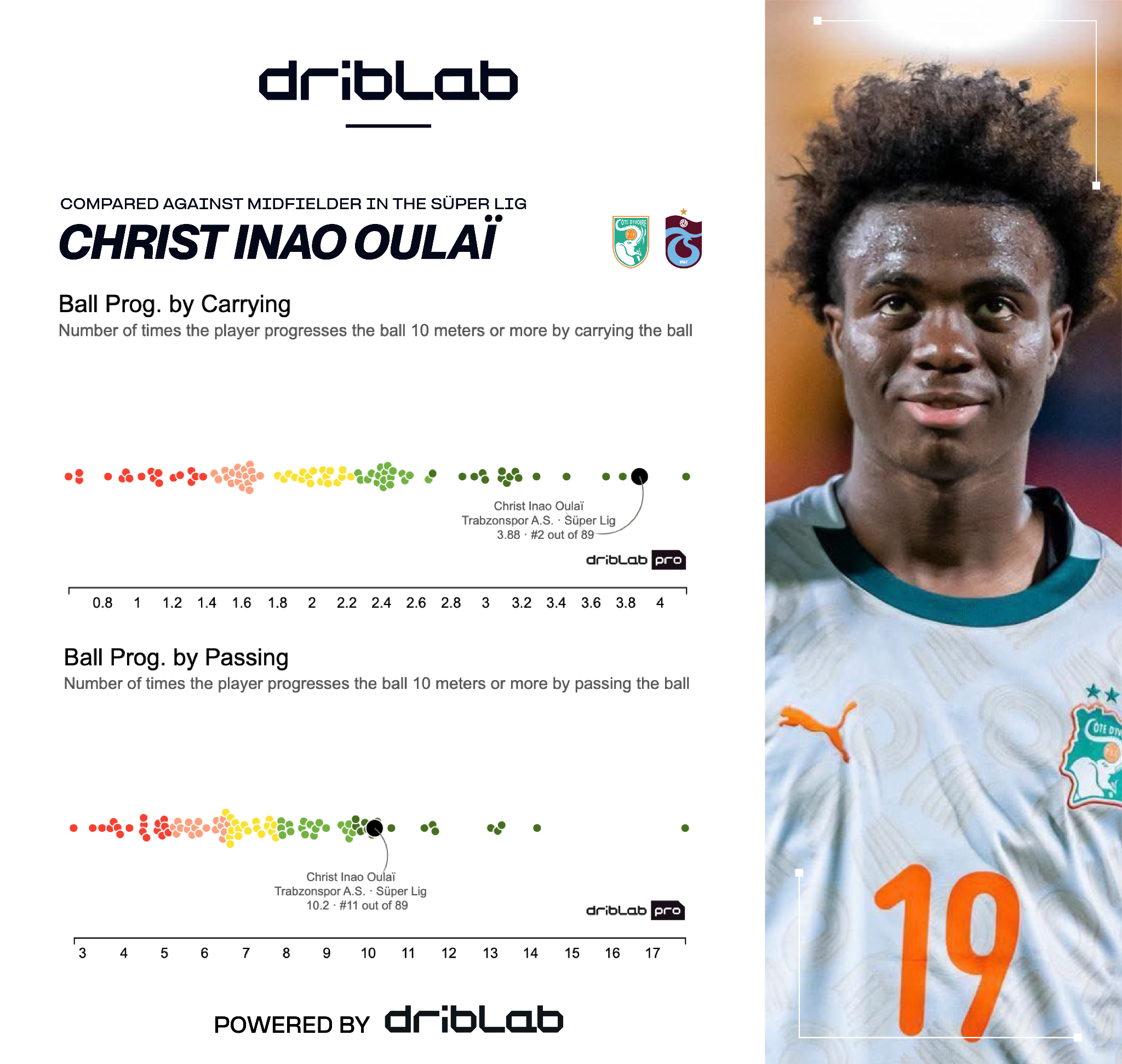
Inao is a player with enormous volume both with and without the ball. With the ball we have already seen it: he retains and progresses. Without the ball he is an active defender, with plenty of tackles, who does not hesitate to engage in duels despite his size and who, consequently, recovers the ball frequently. In short, an extremely interesting player in an extremely interesting team.
Caleb Yirenkyi - Ghana - 2006
At 20, Yirenkyi could perfectly well be one of the strongest players in the whole World Cup. He is not the most delicate player in the tournament, mind you. Nor the most polished.
Perhaps for that reason — because of his ability to impose himself in physical clashes, to win duels and also because of his reading of the game — he has ended the season playing as a centre-back for Nordsjælland. But with Ghana he will play as a midfielder, his most natural position and the one in which he has played the most minutes.
Yirenkyi is not an unknown player as others on this list might be: he has already been linked with some major Premier League clubs. Whether he is ready to make the jump or not, the Ghanaian player, the youngest on the African side's list, fits the physical demands of that league.
Physically, he is a rock. Very hard to knock off balance or move. But he also has resources such as using his arms to protect the ball or claim the available space. This strength is most evident in two aspects of his game: when he has to protect the ball and get out of close pressing, and when he has to win duels. Yirenkyi is also a very underrated and intelligent game-reader. As shown below, he averages a huge number of interceptions per game.
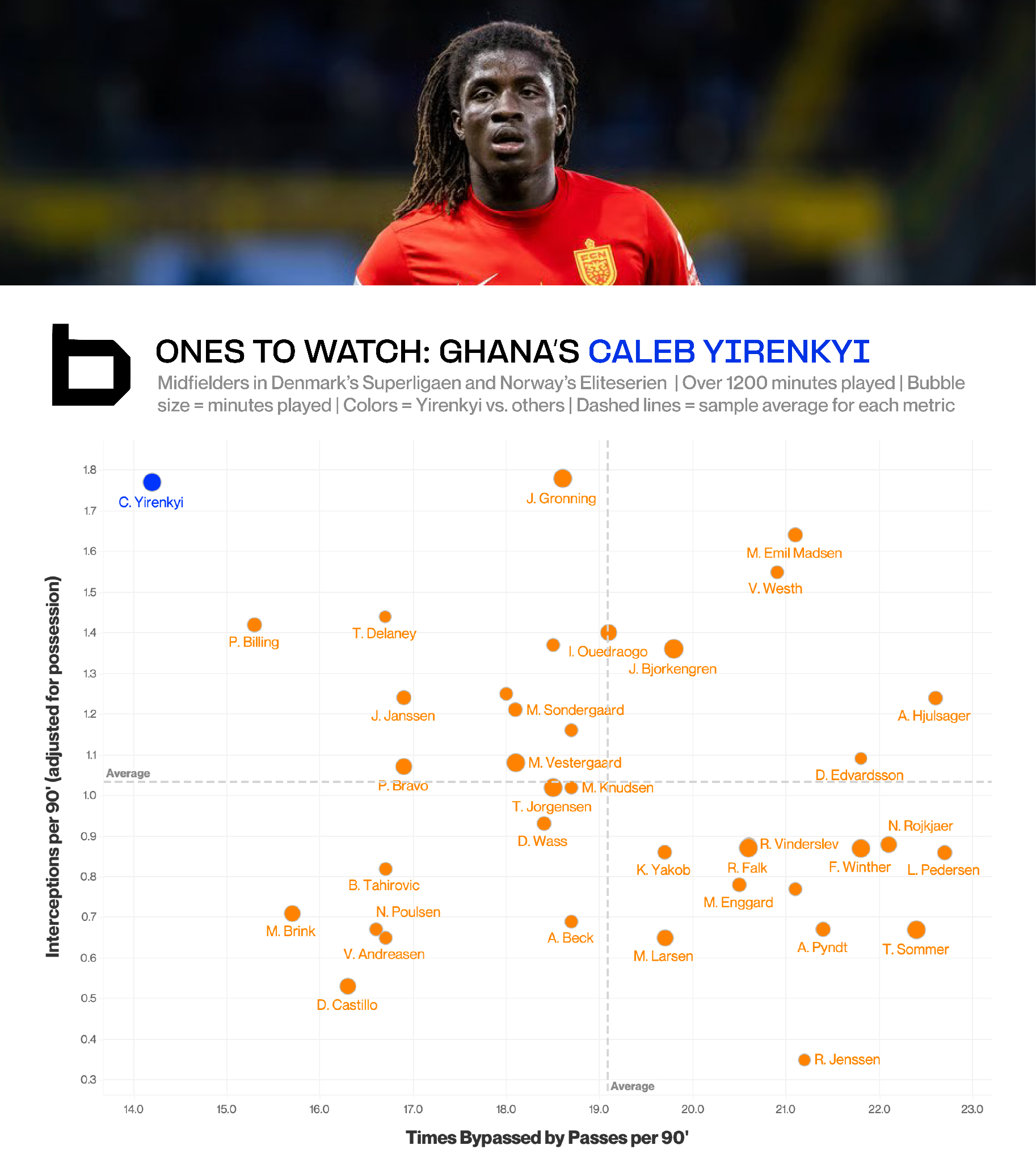
Under pressure he is a very dominant player: he averages 9.79 passes attempted under heavy pressure, the 9th highest figure among 64 midfielders in the Superligaen, but his 92.9% completion rate is even more impressive. No other midfielder has such accuracy when under intense pressure.
Given that figure, his 92.5% completion rate under light pressure may seem trivial, but it is the 4th highest in the category.
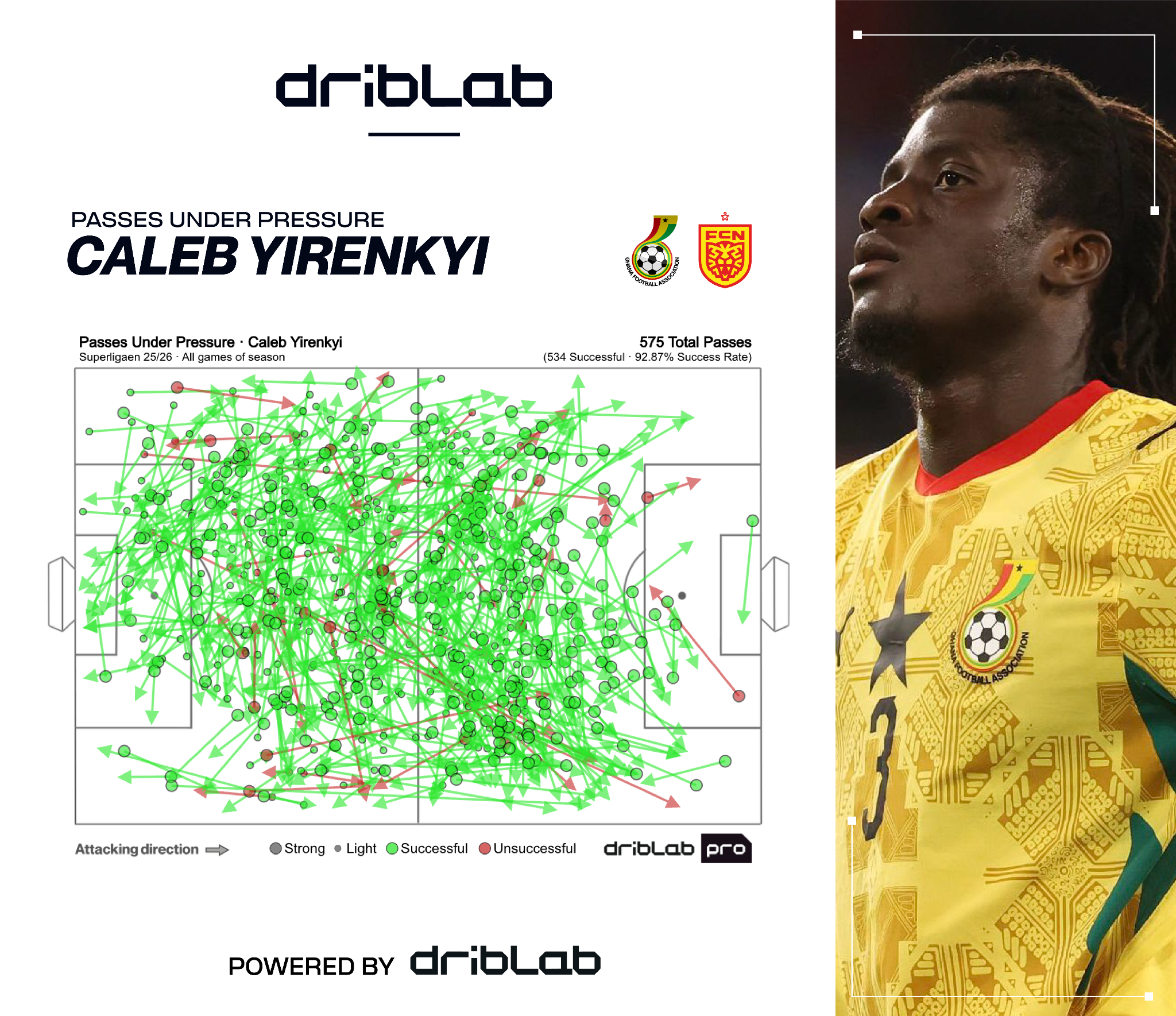
Although they are very different players physically, in the aspect of retention under pressure Yirenkyi and Inao have similar numbers. That said, Yirenkyi attempts many more passes under pressure because the Danish league is far more frantic. What clearly separates one from the other is the aerial game, but also their next action.
For Inao, as we have seen, the next action is not decisive because he is not a very adventurous player. He moves the ball to other teammates and creates contexts for them to shine.
In contrast, with his next action Yirenkyi wants to be incisive, he wants to make the difference. He wins the ball back, plays simple, moves between the lines and charges at the opposition defensive line in possession. Like the cavalry of an army.
He moves constantly without the ball. He is less structural than Oulaï, freer to drop or burst forward. He has the engine to do it.
He is the 6th Superligaen midfielder in off-the-ball movements per match (19.8). On top of that, he ranks above 96% of midfielders in off-the-ball movements ahead of the ball carrier (without breaking the last line) and above 88% in movements in behind the defence.
He moves ahead of the ball and receives in order to charge. With our Arrigo data, we can know how many defenders (specifically opposing defenders, not just opponents) a player can beat by carrying. Yirenkyi is the 4th Superligaen midfielder who beats the most defenders by carrying per match.
He is a player who progresses through abrasion, through outrageous strength, but technically he is a player who, without standing out, has well-learned fundamentals.
Ibrahim Maza - Algeria - 2005
Algeria may well be the most underrated African national team. In part because they have Ibrahim Maza. A do-it-all player. He is basically the modern number '10'. His tasks are different from those of the '10s' of yesteryear, but his work rate is incomparable.
Before talking about his offensive game, it must be made clear that Maza is a player who contributes enormously on defence. He is very active defensively and always looks to defend forward. He is not afraid to fight for the ball, to get involved in duels where he often comes up against bigger and stronger players. The excellent reading of the game we will discuss later also allows him to make interceptions with great frequency.
For anyone who wants to put on an Algeria match and not focus on Maza's obvious qualities with the ball, they can always pay attention to what we have just mentioned.
Leaving aside the very good, let's move on to the elite-level stuff.
The German-Algerian, a Hertha Berlin youth product, is an attacking midfielder or playmaker who influences his team's play from almost any part of the pitch. He's a master at ball control, both for dribbling in tight spaces and for receiving and carrying.
Among midfielders and attacking midfielders in the Bundesliga, Maza averages the highest number of completed dribbles per match (2.89) and ranks 10th in ball progressions through carrying (3.66).
Maza is a player who wants to make the difference when he has the ball, but he does not need to get involved as often as others. He averages only 30 passes per match, a figure exceeded by 40 of the 89 midfielders/attacking midfielders in the Bundesliga.
In our analysis Unlocking Defenses with Passes Received in Space we glimpsed the type of player Ibrahim Maza could become, a description that is closely tied to what I mention in the paragraphs above. A player with positional intelligence and a huge willingness to move without the ball who waits for the right moment to enter the play.
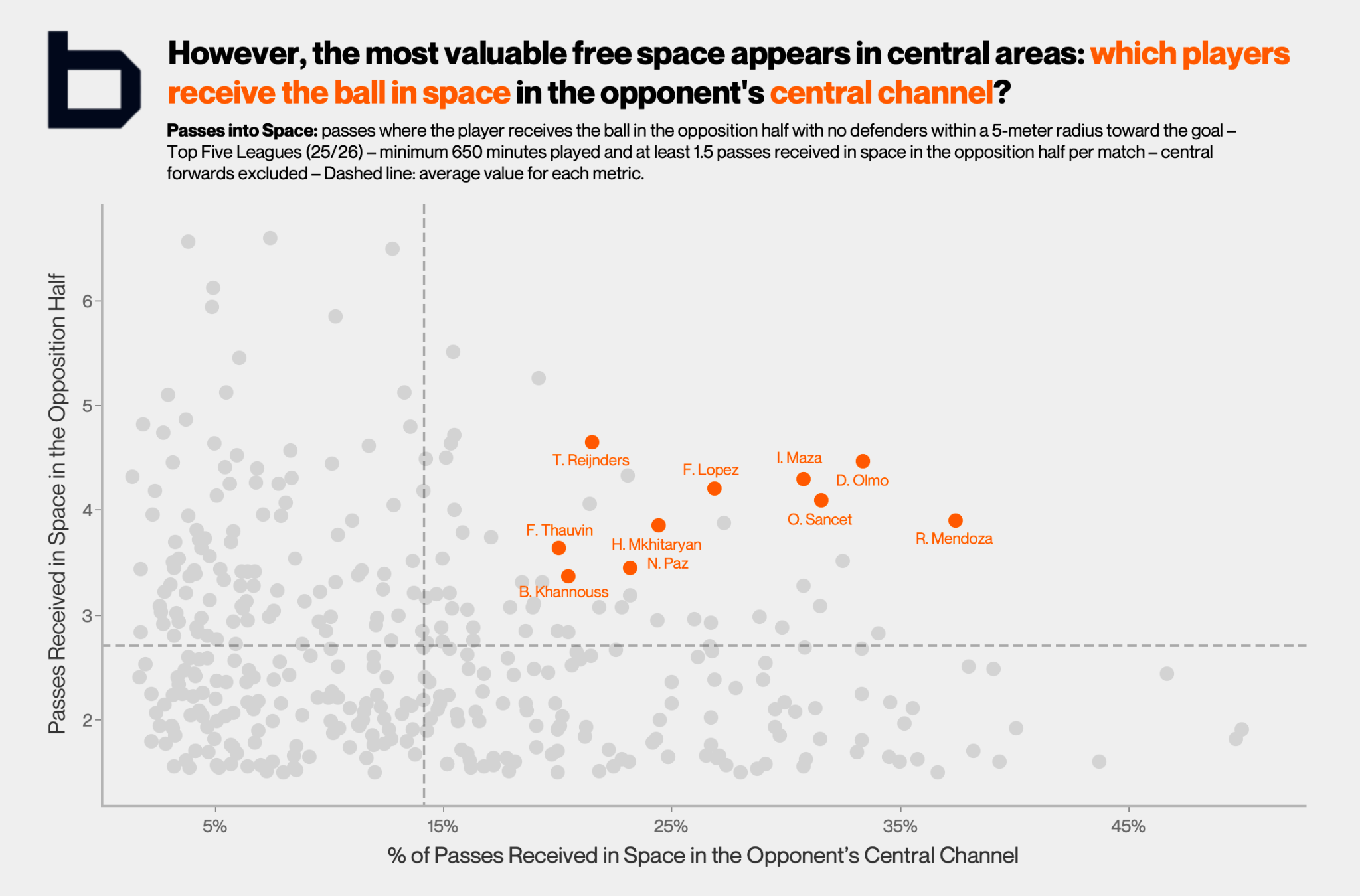
He averages 20.2 off-the-ball movements per match (a figure above 88% of midfielders and attacking midfielders), 10.4 runs in front of the ball that do not break the last line (10th of 90) and 3.16 runs in behind the last line (16th of 90).
In the image above we can see that Maza receives many passes in space (without opponents within a 5-metre radius in the direction of the opposition goal), but he is also one of the players who receives the highest proportion of those passes in the central channel, the most congested zone on the pitch.
In total he has received 90 passes in space, bearing in mind that those received in the first third are not counted. Looking at the map below, we can see that the zones with the most intense colour are in the central channel and in the intermediate areas (left near the box and right in the middle).
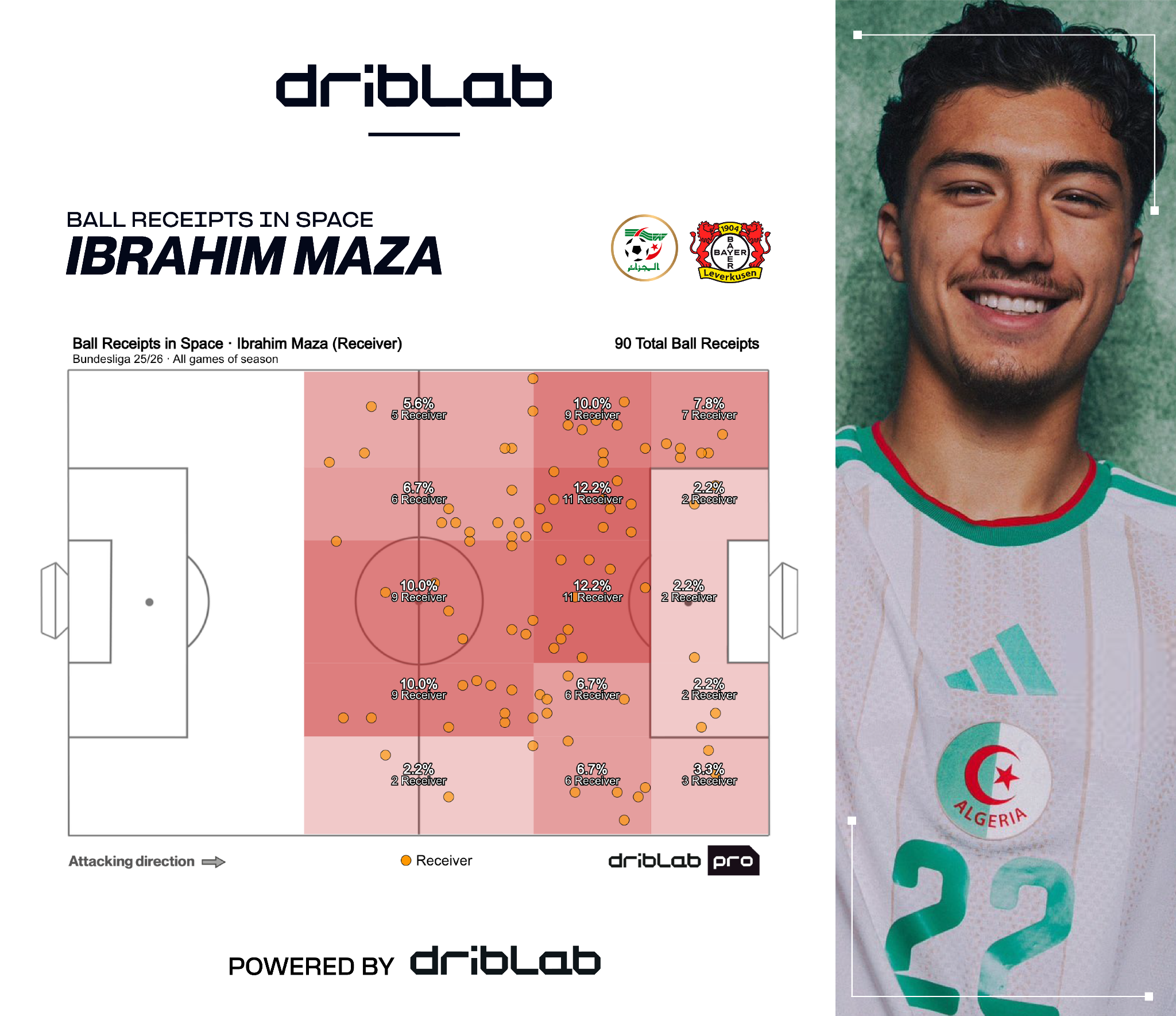
From there, we can identify Maza's area of effect. His objective, after that, lies in penetration. The Algerian averages 2.18 passes that break the defensive line (11th of 89 players) but also 0.68 passes that break both the opposition's midfield and defensive lines at the same time, something unusual that Maza manages to do with notable frequency (8th of 89).
A player who moves well around the pitch, receives and turns in high-traffic situations, carries to progress and then has a final pass, on top of having great xG numbers (he generates 0.25 xG per match, the 9th highest figure among the 90 midfielders or attacking midfielders in the Bundesliga).
Bazoumana Touré - Ivory Coast - 2006
Bazoumana Touré's profile is easy to guess after watching just a couple of clips. Let's be honest: we have seen his profile before. He's kind of a rarity: a left-footed, left winger who has racked up minutes as a full-back, wing-back, wide-midfielder and winger this season.
A wide player on his natural side is fairly easy to picture. A good amount of crosses, lots of carries, frequent runs to the byline, an above-average number of dribbles and danger generated regularly through his passes and crosses.
What makes Bazoumana Touré an potentially top level player is his speed. Not only how fast he is able to run, but the extremely high frequency with which he does everything.
If we compare him with the rest of the wide attackers in the Bundesliga, he is the 6th of 32 who performs the most sprints per match and 11th of 32 in distance covered at sprinting speed per match. 3.39% of his distance covered per match is at sprinting speed.
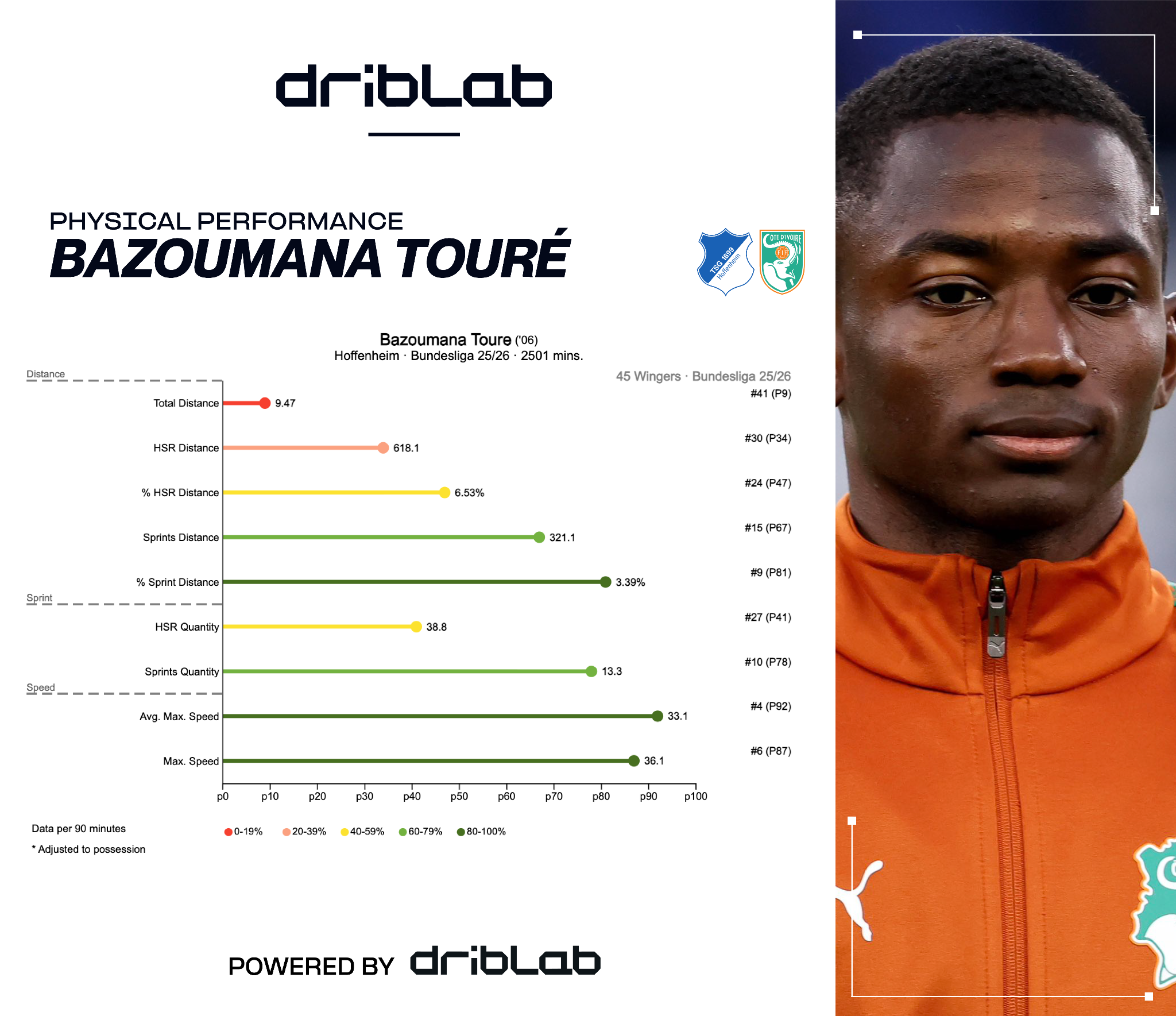
All of this while being the player who averages the highest top speed: 33.1 kilometres per hour. He shares first place with his compatriot Yan Diomandé. You can get an idea of the danger the Ivorian side can carry in transition.
In addition, Touré holds on to lessons from previous seasons. At Hammarby he often played as a striker. This year he averages more runs in behind the defence than any other wide player, except for Michael Olise (Bayern), Luis Díaz (Bayern) and Rayan Philippe (Hamburg).
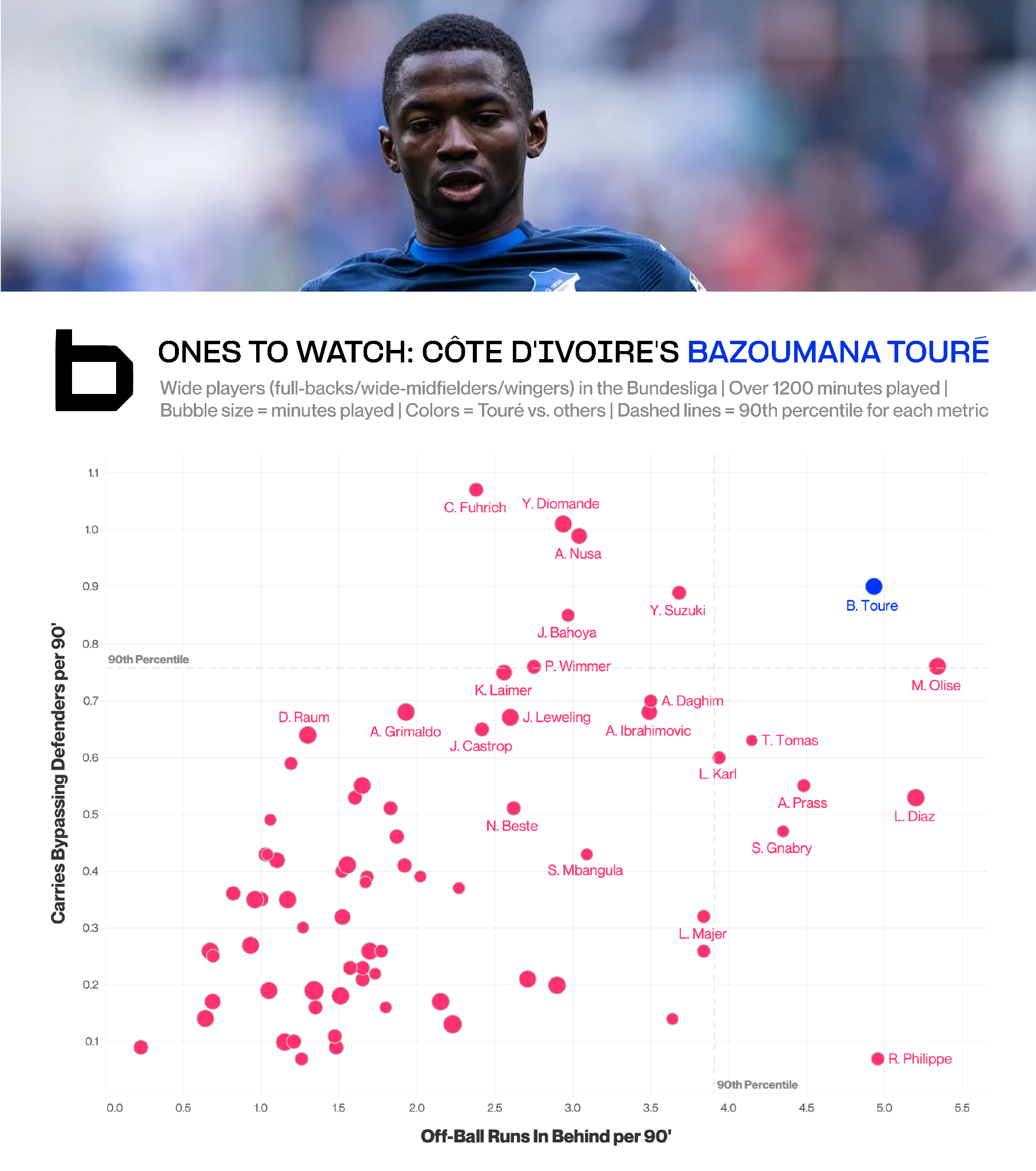
But he has also had phases as a full-back both in Sweden and in Germany, and that is why he rounds off his off-the-ball movement profile with outside overlaps, to double the ball carrier and be able to cross or reach the byline.
He is a very malleable player, who often receives the ball and shakes off his defender with his first touch. As we have seen, he is extremely fast over long distances but also powerful over short ones. You have to mark Bazoumana Touré very tightly or you risk him slipping away and never being seen again.